
 Updated August 31, 2026
 8 minute read
Grading Pokémon cards is one of the clearest ways to protect and prove what your collection is worth. Whether you collect for love of the hobby or with an eye on resale, understanding how grading works helps you make the most of your cards. This guide covers how the process works, what drives a card’s grade, which cards are worth submitting, and how to keep your cards in top condition.
Why Grading Your Pokémon Cards Is a Smart Move
Grading locks in a card’s condition permanently and turns it into a verifiable asset. A third-party grade settles two things buyers care about most: authenticity and condition. That certainty is why graded cards typically sell for more than raw copies, sometimes many times more for a high-grade vintage card, and why they are easier to sell at all: a buyer trusts a sealed, graded slab in a way they cannot trust a loose card.
There is a financial dimension beyond resale. A graded collection is documented and verifiable, which means it can serve as real borrowing power: graded cards can be used as collateral for a loan. Are graded Pokémon cards worth more? For desirable cards in strong grades, they usually are. So the useful question is which cards will do the most for your collection’s value.
How Does Pokémon Card Grading Work?
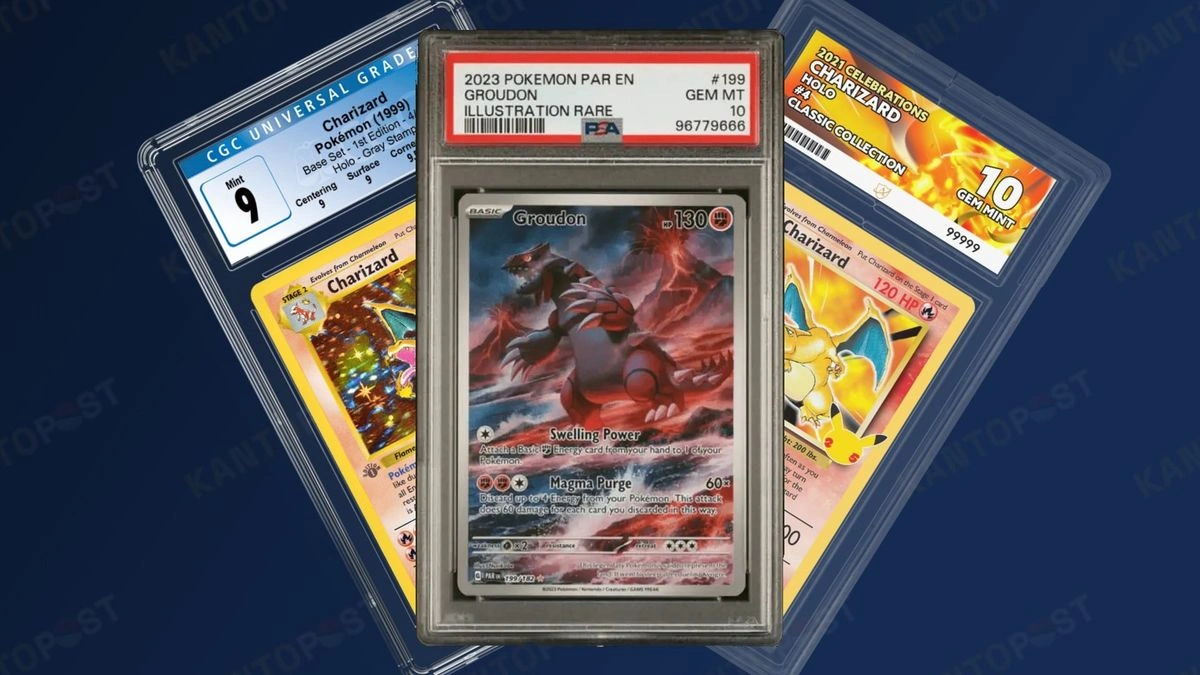
The process is straightforward once you know the steps. You start by choosing a reputable grading company: PSA, Beckett Grading Services (BGS), and CGC are the dominant names. You fill out a submission form, then package the cards in sleeves and rigid holders so they arrive undamaged.
Graders evaluate each card on a 1 to 10 scale, where 10 is pristine. They weigh four elements in particular, centering, corners, edges, and surface, and combine them into the overall grade (PSA explains its PSA grading scale in full). The card is then sealed in a tamper-evident slab with a label showing the grade and a unique certification number.
Grading companies offer several turnaround tiers (from budget bulk service to fast express), each with its own price and wait time. Costs have risen and vary by company: as a rough guide, expect roughly $15 to $150 or more per card, depending on the grader, the service tier, and the declared value, plus shipping and insurance. Because pricing changes often, check the grader’s current rate card before you submit.
What Pokémon Cards Are Worth Grading
So, what Pokémon cards are worth grading? Not every card earns back the fee, so focus on the categories most likely to reward it:
- Vintage cards. Early sets carry historical weight and a proven collector market.
- Holographic cards. Their finish and often-limited print runs make condition matter more.
- Modern chase cards. Rare variants and short prints from recent sets draw strong demand.
- Promotional cards. Limited-edition releases from special events are scarce by design.
- High-grade raw candidates. Well-preserved cards with a real shot at a gem-mint grade.
The test is simple: compare the likely graded value against the raw value minus grading and shipping fees, and submit only when the expected premium clearly beats those costs. For a low-value card, grading rarely pays; the math works once a strong raw card is worth enough that a high grade meaningfully lifts its price. The same value logic applies across other categories eligible for rare collectibles loans, from sports cards to comics and memorabilia.
Is It Worth Grading Pokémon Cards? The Financial Case
For the right cards, generally yes. A graded card carries verified condition and authenticity, which makes it easier to sell and, for desirable cards in high grades, often worth a clear premium over a raw copy. Graded cards also tend to hold their value better over time, because the grade removes the guesswork that makes raw-card pricing so uncertain.
Grading also turns a collection into something closer to a documented portfolio. A run of PSA-graded cards is verifiable, trackable through population reports, and recognized by buyers and lenders alike as a tangible asset. That is the practical case: grading does more than describe your cards, it makes their value legible to other people.
What Affects the Grade Your Card Receives
When graders assess a card, four elements carry the most weight:
- Centering. How even the borders are around the image.
- Strong: even borders on all sides.
- Weak: noticeably off-center, shifting the image.
- Corners. Sharp, undamaged corners score best.
- Strong: crisp and pointed.
- Weak: rounded, soft, or bent.
- Edges. Clean edges with no wear.
- Strong: smooth, no nicks.
- Weak: fraying or chipping.
- Surface. Free of scratches and scuffs.
- Strong: clean and clear.
- Weak: scratched, printed lines, or scuffing.
Graded Pokémon Cards as a Financial Asset
A graded collection functions as a documented set of assets. Each card carries a unique certification number and appears in the grader’s population report, so its authenticity, grade, and relative scarcity are all verifiable by anyone.
That verifiability is what gives graded cards borrowing power. Beyond selling, collectors can use a graded collection as collateral. Qollateral offers trading card loans against graded cards, which adds a financial dimension to collecting without treating cards as a reason to take on debt. The point is not to encourage borrowing for its own sake, but to recognize that a well-kept, graded collection is more than a hobby: it is a verifiable asset with real market standing. To understand how card values translate into loan value, our guide to Pokémon card values goes deeper.
Tips for Maintaining Card Condition
Good habits protect a card’s value long before it reaches a grader:
- Storage. Keep cards cool, dry, and out of direct sunlight, in sleeves inside binders or hard cases.
- Handling. Handle with clean, dry hands and avoid touching the card face, which transfers oils and dirt.
- Display. Use UV-protective cases to prevent fading, and keep the display area free of dust and moisture.
- Regular inspection. Check cards periodically for early signs of wear so you can address problems before they worsen.
How to Estimate a Card’s Graded Premium Before You Submit
The smartest submissions start with a quick estimate of the payoff. Before you send a card in, you can get a reasonable sense of what a grade would add:
- Pull recent graded comps. Search completed sales for your exact card in the grade you expect (say, PSA 9 or PSA 10). Recent sold listings, not asking prices, show what the market is actually paying.
- Check the population report. Each grader publishes how many copies exist at each grade (PSA’s population report is the standard reference). A card that is scarce in gem mint tends to command a larger premium; one with tens of thousands of 10s will not.
- Compare against the raw price. Subtract your card’s current raw value, plus grading and shipping, from the expected graded value. What remains is your rough upside.
- Be honest about the grade. A card you hope is a 10 but is realistically a 7 or 8 changes the math entirely, since the premium is concentrated at the very top grades. When in doubt, assume the lower grade.
This is also where a card’s condition, the centering, corners, edges, and surface covered above, turns into a number. The closer a raw card looks to gem mint, the more grading tends to reward it.
Final Thoughts
Grading Pokémon cards is a core part of collecting and trading with intent. When you understand how the process works and keep your cards in strong condition, you protect both their value and their appeal, and you turn a collection into something you can prove, sell, or borrow against with confidence.
Frequently Asked Questions
What is the best way to store Pokémon cards?
Keep them cool, dry, and out of direct sunlight, in protective sleeves inside binders or hard cases. Stable conditions and careful handling preserve the condition that grading rewards.
How do I choose a reputable grading service?
Stick with the established graders, PSA, Beckett (BGS), and CGC, and compare their current turnaround times and fees. Collector reviews and population data can help you decide which best fits the cards you plan to submit.
Does grading increase a card’s value?
For the right cards, usually yes. Grading verifies condition and authenticity, which buyers pay a premium for, especially on high grades. On low-value cards, though, the fees can outweigh the gain, so grade selectively.
How long does grading take?
It depends on the service tier, from a few days on the fastest express options to several months on budget bulk tiers. Turnaround and pricing both shift with demand, so check the grader’s current estimates before submitting.
