
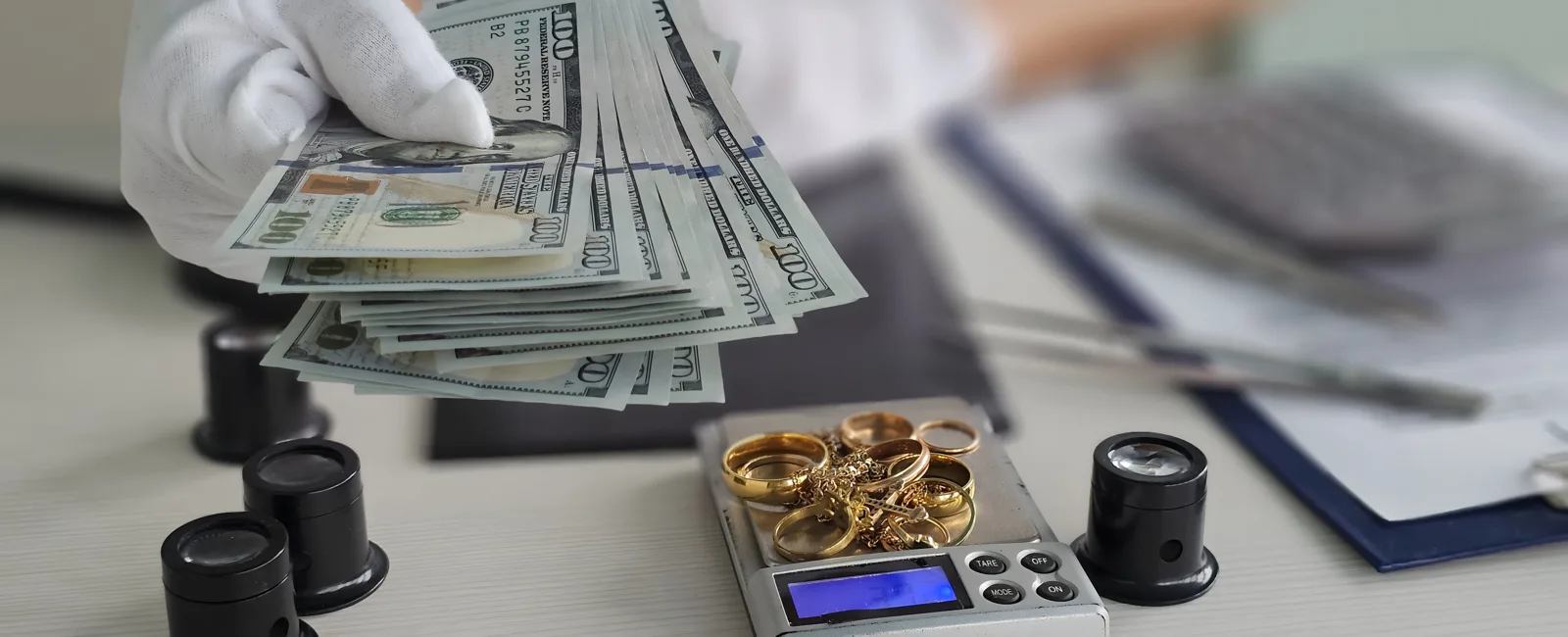
 Updated November 25, 2026
 11 minute read
How much is 14K gold worth compared to other types of gold jewelry? It depends on factors like weight, purity, and the daily spot price. Gold purity is measured in karats, with 14K gold containing 14 parts gold and 10 parts other metals, or approximately 58.3% pure gold. By that logic, all gold jewelry holds value whether it’s pristine, broken, or has sat in a jewelry box for decades.
In this guide, we will explain everything you need to know about the value of 14K gold jewelry and the best ways to turn that value into instant liquidity, whether by selling it outright or securing a gold loan.
What Does 14K Mean? Gold Karat Explained
14K gold is made of 58.3% pure gold and 41.7% other metals. The “K” abbreviation stands for “karats,” a measurement of the proportion of pure gold in an alloy. The scale is based on 24 parts, with 24K being virtually pure. 22K gold is 22 parts gold and 2 parts other metals. 18K gold is 18 parts gold and 6 parts other metals, and so on.
Why add other metals at all? Pure gold is soft and more prone to scratches and dents, which isn’t always ideal for jewelry. Adding other metals, like palladium, copper, silver, or zinc, makes the alloy harder and more durable.
Comparing 10K vs 14K gold, both contain a high percentage of other alloyed metals. 10K gold is 41.7% pure gold and 58.3% added metals, while 14K gold is 58.3% pure gold and 41.7% added metals. Both are among the most affordable options for solid gold jewelry, with 14K being particularly popular for its durability and higher purity than 10K gold.
Important note: Don’t confuse “karats” with the similar-sounding “carats,” which is also used in jewelry-making. It measures something entirely different. Karats measure gold purity, while carats measure gemstone weight.
Gold Purity by Karat
The table below compares gold karat by gold content, relative price, and durability.
| Gold Karat | Gold Purity | Other Metals/Trace Impurities | Price | Durability |
|---|---|---|---|---|
| 24K | 99.9% | 0.1% or less | Highest | Very soft; scratches & dents easily |
| 22K | 91.7% | 8.3% | Very High | Soft; prone to scratches |
| 18K | 75% | 25% | High | Good durability |
| 14K | 58.3% | 41.7% | Moderate | Very good durability |
| 10K | 41.7% | 58.3% | Lowest | Generally hard and durable |
Note: Price comparisons assume metals are similar in weight and design. Furthermore, durability varies depending on the metals in each gold alloy. Source: World Gold Council, 2026.
How to Read Gold Stamps
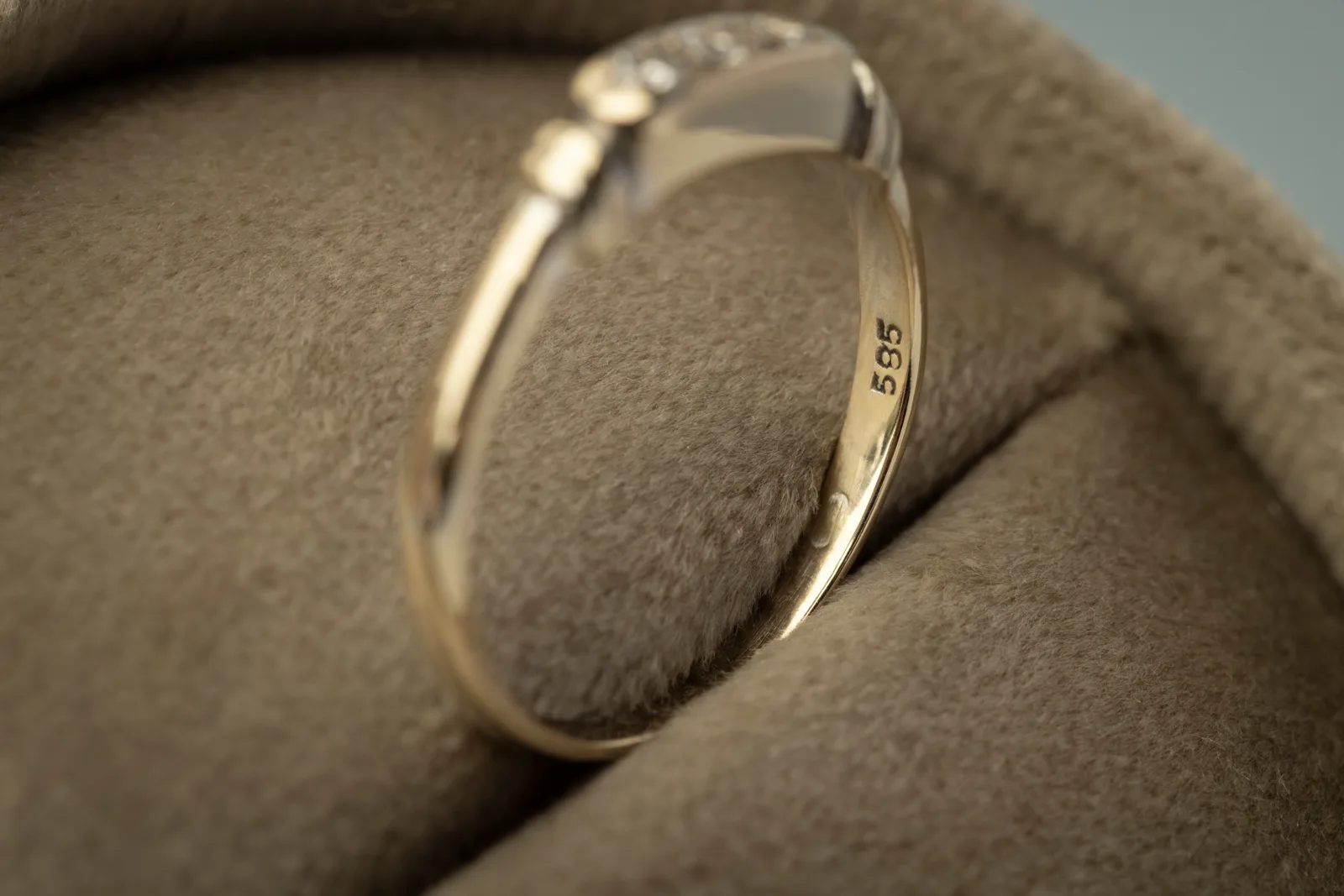
Gold jewelry stamps, also known as hallmarks or maker’s marks, are numbers, letters, and other symbols that convey information about the piece, such as purity, the maker, origin, and whether it is gold-plated.
Gold jewelry stamps are small and often require a magnifying glass or loupe to read. Most often, they are placed somewhere discreet, such as the inside of a ring band, an earring back, or on a bracelet or necklace clasp.
Maker’s Marks: identify the brand, jeweler, or manufacturer that produced the piece. These marks consist of initials, logos, or even a full brand name.
Hallmarks: official stamps on a piece of jewelry that certify its precious metal purity and may include additional information, such as a date or, in some countries, the assay office that tests and purifies the metal’s purity.
Purity stamps: signify precious metal content. For example, 585 represents 14K gold with a purity of 58.5%. Gold-plated or gold-filled jewelry may have additional markings, such as GP or GF, respectively. For example, a piece of jewelry stamped 14K GP indicates the jewelry is plated with 14K gold rather than made entirely of 14K gold.
Gold-filled, gold overlay, and rolled gold plate (abbreviations listed below) feature a layer of at least 10K gold mechanically bonded to a less expensive base metal, like nickel. Gold electroplate also uses a metal base but applies a layer of 10K gold or higher through an electrolytic process, with a minimum thickness equivalent to 0.175 microns of pure gold.
Common gold stamps:
| Stamp | Meaning |
|---|---|
| 999 | 24K gold – 99.9% gold |
| 916 | 22K gold – 91.6% gold |
| 750 | 18K gold – 75% gold |
| 585 | 14K gold – 58.3% gold |
| 417 | 10K gold – 41.7% gold |
| 375 | 9K gold – 37.5% gold |
| YG, WG, RG | Yellow gold, white gold, rose gold |
| RGP | Rolled gold plate |
| GF | Gold filled |
| GE/GEP | Gold Electroplated |
| GP | Gold plated |
| HGE | Heavy gold electroplate |
Sources: FTC Jewelry Guide, 2026. Brilliant Earth, 2026
How Much is 14k Gold Worth Today?
As of November 24, 2026, the real-time spot price of gold is $3,558.40 per troy ounce, according to goldprice.org. This price fluctuates throughout the day based on market conditions and is a great starting point for determining the value of gold jewelry. Using the formula explained below, the price of 14K gold today is $66.74 per gram. For more information, see our guide on how gold spot prices work.
The Melt-Value Formula
Melt value is the intrinsic value of gold based on its weight and the current gold spot price (APMEX, 2026). We can use the melt-value formula explained below to determine the value of the gold in a piece of 14K gold jewelry today.
Melt Value = Weight (grams) x Gold Purity (decimal) x Live Spot Price Per Gram.
Step 1: Determine the live spot price per gram:
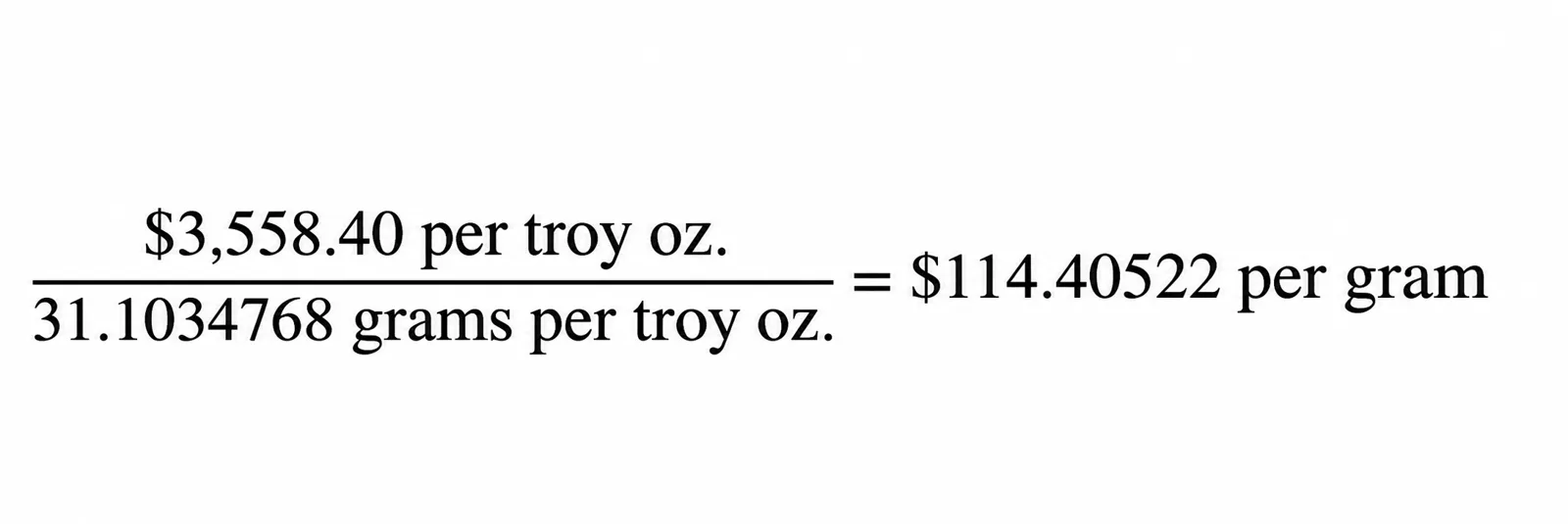
Step 2: Convert gold karats to a decimal by dividing by 24. For 14K gold: 14 ÷ 24 = 0.5833, or approximately 58.3% pure gold.
Step 3: Plug each number into the melt value formula.
For example, the melt value of 10 grams of 14K gold is calculated as follows, using the gold spot price as of November 24, 2026:
10 grams x (14÷24) x $114.40522 = $667.36
Melt value is the estimated value of the gold itself. It isn’t necessarily what a buyer or lender would offer when selling the jewelry or using it as collateral for a loan.
Why Gold Jewelry Can Be Worth More Than Melt Value
Melt value only accounts for gold content, not other value-driving factors that can command a premium in the pre-owned market, like exceptional craftsmanship, brand prestige, demand, valuable gemstones, or rare, vintage designs.
Two pieces of jewelry with the same gold purity and gold alloy weight can have very different values when it comes time to sell or secure a jewelry loan.
10K vs 14K vs 18K Gold: Which Holds More Value?
Of the three, 18K gold (75% pure gold) has the highest intrinsic gold value per gram, followed by 14K gold (58.3%) and 10K gold (41.7%). However, gold purity isn’t the only factor that determines value. Market demand, craftsmanship, brand prestige, and even the presence of quality diamonds or other gemstones can also affect a piece of gold jewelry’s value.
Purity vs. Durability
Higher gold purity means greater intrinsic value per gram, but it doesn’t necessarily make the jewelry more desirable. Jewelers add other metals to gold to make it more durable for everyday wear. 18K gold, for example, contains less alloying metal than 14K or 10K gold, which makes it generally softer and more susceptible to scratches and dents. Durability can certainly influence the desirability of some gold jewelry, but it doesn’t necessarily determine its resale value.
Yellow, White, and Rose Gold
The three most common gold colors in jewelry are yellow, white, and rose gold. Gold is naturally yellow in color. However, adding copper to the mix creates the pinkish hue associated with rose gold. The more copper added, the redder or pinker the hue. The same process applies to white gold, which is achieved by adding white metals, like silver, nickel, or palladium, to pure gold. Some white gold jewelry is also rhodium-plated for a brighter finish. Lastly, yellow gold is often alloyed with copper and silver.
White, yellow, and rose gold of the same purity and weight have the same intrinsic gold value. However, treatments like rhodium plating, craftsmanship, and market demand can influence a piece of jewelry’s retail price and secondary market value.
Is Broken Gold Jewelry Worth Anything?
Broken jewelry still holds value, even if it can no longer be worn. Broken chains, missing earrings, bent rings, broken clasps, and other components can all be appraised based on their gold content and weight. What’s more, selling isn’t the only option for broken jewelry. You can also use it as collateral for a short-term loan, a good alternative for anyone who prefers to retain ownership of their gold and potentially benefit from future appreciation.
How to Check Your Gold at Home, and When to Get It Tested
The stamp found on a piece of gold jewelry can convey a wealth of information, right from the comfort of your own home. In some cases, the original markings may have worn away over the years or may be missing entirely. In that case, a jeweler can examine and test the jewelry more thoroughly to determine its gold purity and assess its value.
Should You Sell or Borrow Against Gold Jewelry?
The main difference between selling and securing a gold jewelry loan is ownership. Selling is often permanent, while using gold jewelry as collateral for a loan lets the borrower keep ownership, provided the loan is repaid according to its terms.
Selling jewelry outright gives the owner immediate access to cash without any repayment obligations. However, if the piece holds sentimental value or the owner prefers to keep it, a gold pawn loan is another option.
Why Borrowers Choose Qollateral
Qollateral is a trusted luxury asset-backed lender rated A+ by the BBB and with a 5-star Google business rating, serving clients in NYC and nationwide. All assets are valued by expert appraisers with years of industry experience to ensure accurate valuations and competitive loan offers. Furthermore, every asset pledged as collateral for a loan is fully insured by Lloyd’s of London and is stored in a secure, monitored vault for complete peace of mind.
Frequently Asked Questions
How much is 14K gold worth per gram?
14K gold is worth approximately $66.74 per gram in melt value, based on the gold spot price of $3,558.40 per troy ounce on November 24, 2026. That number doesn’t necessarily reflect the offer someone would receive when selling or borrowing against gold jewelry.
Is 10K or 14K gold better?
The better option ultimately depends on someone’s priorities and how they plan to wear their jewelry. 10K gold is generally more affordable and harder because it contains a higher percentage of other metals (58.3%). However, it can have a lighter, less vibrant gold hue compared to higher-karat gold alloys. 14K gold is also quite durable, with 41.7% other metals, making it a popular choice for daily wear while still containing a higher percentage of pure gold (58.3%).
Is 14K or 18K gold worth more?
18K gold has more intrinsic gold value per gram because it contains a higher percentage of pure gold. 14K gold is 58.3% pure gold, while 18K gold is 75% pure gold. However, other factors, like craftsmanship and market demand, can also influence value.
What does 585 mean on gold?
The number 585 is a purity stamp commonly found on 14K gold jewelry. It indicates the metal contains 585 parts pure gold per 1,000 parts, or 58.3%. While the purity of 14K gold is approximately 58.33% (14÷24), 585 is a widely recognized international fineness mark for 14K gold.
Is broken gold jewelry worth anything?
Yes, broken gold jewelry still holds value, even if it can’t be worn. Appraisers value pieces based on their gold content and weight.
Can I borrow against broken or unbranded gold jewelry?
Yes. Lenders like Qollateral calculate loan offers based on the current gold market price.
Do I need a receipt to borrow against gold jewelry?
A receipt is generally not required to borrow against jewelry. However, original purchase papers and receipts can help authenticate designer or branded jewelry and may lead to a higher loan offer. Without supporting documentation, the loan offer will be based on the jewelry’s gold purity, weight, and current gold market price. Proper documentation supports the brand’s premium on the secondary market, which is above the gold’s intrinsic value in most cases.
Get an offer now and turn your gold jewelry into quick cash as soon as today.
Curious how much your gold jewelry could be worth as collateral? Try our gold loan calculator for an instant estimate.
Sources
- Gold Loan Calculator, Qollateral, 2026
- Live Gold Spot Price, Goldprice.org, 2026
- Yellow Gold vs. Rose Gold: Discovering the Differences. Gemological Institute of America Inc., 2002-2006
- Buying Platinum, Gold, and Silver Jewelry. Federal Trade Commission, 2026
- Is Gold Jewelry a Good Investment? World Gold Council, 2026
- Melt Values and Melt Value Prices. APMEX, 2026
- Meaning of Symbols Stamped on Jewelry. Brilliant Earth, 2026
