
 Updated September 8, 2026
 7 minute read
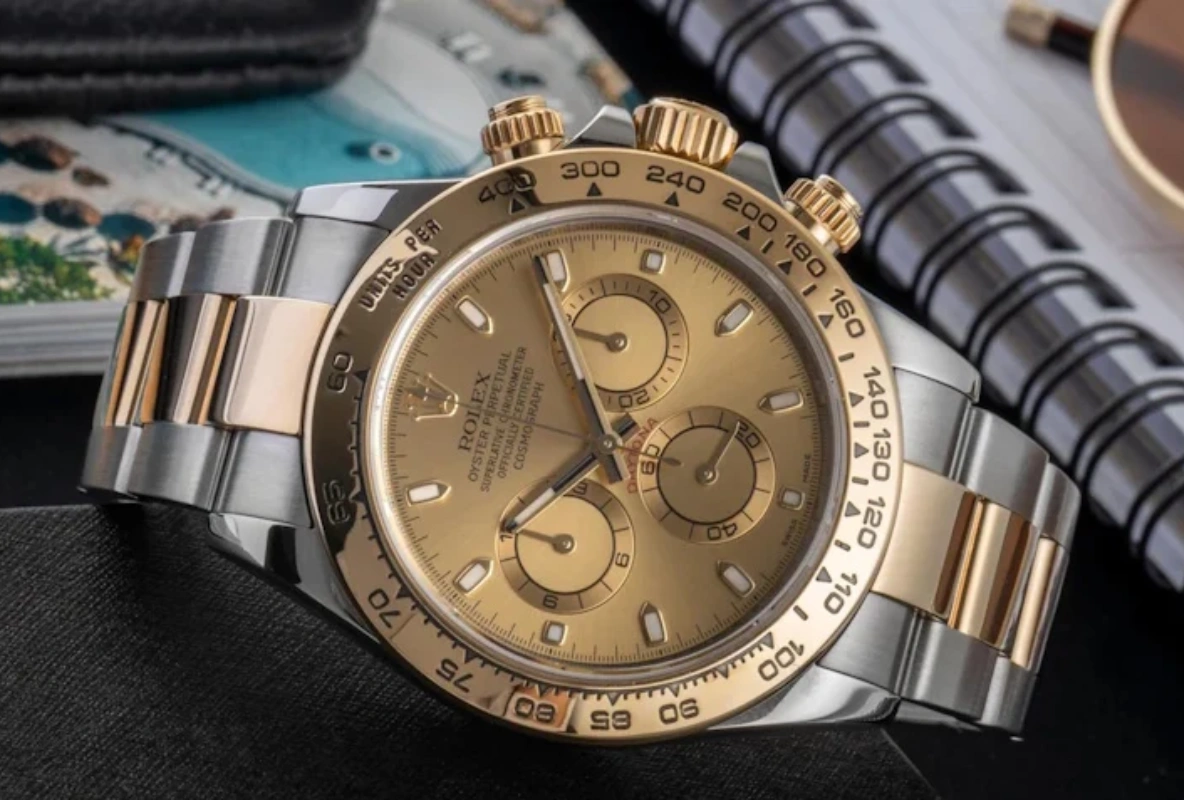
Watches that hold their value have become genuine financial assets, because a deep resale market makes a luxury watch highly liquid. For owners, that liquidity matters: you can access your watch’s value without selling it, by borrowing against the watch and reclaiming it on repayment. The asset stays yours; the cash is freed up.
Why the Secondary Watch Market Is Surging
Demand for established references has outrun supply, and that imbalance has driven a deep, active secondary market for luxury watches. Popular steel sports models from Rolex and Omega often trade at or above retail on the pre-owned market, and strong luxury watch resale value across the most sought-after references has made these watches behave like durable stores of wealth. Even as the broader watch industry has faced headwinds, Deloitte’s Swiss watch industry study has found that the high-end segment remains the most resilient, which is exactly the tier that holds value best as collateral.
For owners, a rising market only matters if you can reach that value. An owned watch can be turned into cash without being sold, which is what the rest of this guide covers.
What “Watches That Hold Their Value” Actually Means for You
A watch that holds its value is, in practical terms, a liquid store of wealth on your wrist. The traits that drive that durability are consistent, and knowing them helps you understand your own piece:
- Brand and reference. Established makers and their most-requested references hold value best; demand for them rarely fades.
- Condition. Unpolished, well-maintained, factory-correct examples command the strongest and most predictable prices.
- Completeness and provenance. Original box, papers, and a documented service history materially strengthen resale value.
Among the best watches to hold value, the Rolex Submariner is a benchmark: deep demand, constrained supply, and a liquid global market. Do Rolex watches hold value? As a rule, yes. Sought-after Rolex references hold value well, and some have appreciated over time, driven by enduring demand and tight supply, though like any asset, their prices move in cycles rather than only upward. Neutral trackers such as the Knight Frank Luxury Investment Index have followed fine watches as a durable, if cyclical, asset class. For a closer look at specific models, see our guide to references that hold their value.
How Much Is Your Watch Worth Right Now?
So, how much is your watch worth today? Four things set the number: the specific reference, its condition, whether you have the original box and papers, and current market demand. The key is to read that value from the secondary market, not from retail prices, since what a watch sells for on the open market is often very different from its boutique sticker. To understand how much your watch is worth, owners can review recent comparable sales and condition-graded listings rather than list prices.
This is also where a professional appraisal matters. Qollateral bases its valuations on actual secondary and wholesale market data for your exact reference, condition, and configuration, not on retail or trade-in guides, which is what makes a preliminary figure both realistic and fast.
Turning Your Watch’s Value Into Liquidity Without Selling
A liquid market gives an owner options. Selling is only one of them, and often the worst. A sale is permanent; it can trigger collectibles capital gains tax (a higher U.S. capital-gains category, up to a 28% federal maximum, that applies to watches and other collectibles held as investments), and it hands all future value to the next owner. There are really three things you can do with a valuable watch:
- Sell it. A watch worth roughly $20,000 sold to a dealer at a typical spread might net around $16,000. The sale is fast, but it is permanent and potentially taxable, and the watch and its future value are gone. (The most liquid steel sports models sell at a tighter spread; less liquid pieces, wider.)
- Insure and hold it. You keep the watch, but its value stays locked and inaccessible until you eventually sell.
- Borrow against it. You keep the watch and its future upside, and still access cash now. You repay the loan and reclaim the piece.
Borrowing is the option that preserves both the watch and its upside. The process is straightforward: you submit your watch’s details and receive a preliminary offer, the watch is verified and then securely stored and insured, funds are wired to you, and the watch is returned when you repay. If you would rather keep your watch than part with it, you can borrow against your watch directly.
Qollateral accepts luxury watches including Rolex, Patek Philippe, Audemars Piguet, and Richard Mille as collateral, structures these as non-recourse loans (the lender’s claim is limited to the watch itself, with no personal liability beyond it), and serves clients nationwide through virtual appraisals and fully insured shipping.
Why Choose Qollateral
For borrowing against a luxury watch, Qollateral offers a discreet, private-banking-style experience rather than a pawn-shop one. The company is based in Manhattan’s Diamond District and works with clients nationwide.
- Watch-backed loans on pieces you already own. Borrow against your watch and keep it; this is liquidity, not a sale.
- Appraisals on real market data. Valuations are based on actual secondary and wholesale market data, not retail or trade-in guides.
- Secure, insured storage. Watches are held in a monitored vault and insured by Lloyd’s of London in transit and storage.
- Non-recourse structure. The watch satisfies the balance, with no personal liability beyond it and no credit-bureau reporting.
- Nationwide service. Virtual appraisals and prepaid, fully insured shipping mean you do not need to visit New York.
- Confidential, white-glove handling. Discreet, professional service from one of the country’s established collateral lenders.
Qollateral is BBB A+ accredited and licensed by New York City’s Department of Consumer and Worker Protection (DCA License #2108815 | #2108816), with GIA-trained appraisers. The company has also been featured in Forbes, Entrepreneur, USA Today, duPont Registry, Fox News, and Sports Illustrated. A confidential, no-obligation watch evaluation is available whenever you want a current figure.
Frequently Asked Questions About Watch Value and Liquidity
How much is my watch worth?
A luxury watch’s value depends on its brand, reference, condition, completeness (box and papers), and current secondary-market demand. The most accurate figure comes from live secondary and wholesale market data rather than retail prices. Qollateral appraises watches using actual market data and can provide a realistic preliminary figure quickly.
What watches hold their value best?
Established references from Rolex, Patek Philippe, and Audemars Piguet tend to hold value best, supported by strong demand, limited supply, and deep secondary markets. Condition and original paperwork significantly affect how well a specific watch retains value, so a well-kept, complete example holds up better than a worn one.
Do Rolex watches hold value?
Generally, yes. Sought-after Rolex references hold value well, and some have appreciated, thanks to enduring demand and constrained supply, though prices move in cycles. That durability and liquidity are why a Rolex works as a financial asset that an owner can borrow against instead of selling.
Can I get a loan against my watch without selling it?
Yes. An asset-backed collateral loan lets you borrow against a watch you already own. Through Qollateral, the watch is appraised on real market data, securely stored and insured, and returned on repayment, so you keep the watch and its future value while accessing immediate cash.
Is a luxury watch a good store of value?
For established references in good condition, a luxury watch can be a strong and unusually liquid store of value. It can be sold quickly or borrowed against, giving owners flexibility that most possessions do not offer. As with any asset, values move with the market, so condition and documentation matter.
The Takeaway for Owners
A booming secondary market has turned watches that hold their value into something more useful than status symbols: liquid financial assets. For an owner, the takeaway is not to time the market or trade, but to recognize that the value on your wrist is reachable. You can access it without selling, keep the watch and its future upside, and use a fine timepiece as the asset it now is.
For a free, no-obligation appraisal on your luxury watch, contact Qollateral today.
