
 Updated July 16, 2026
 8 minute read
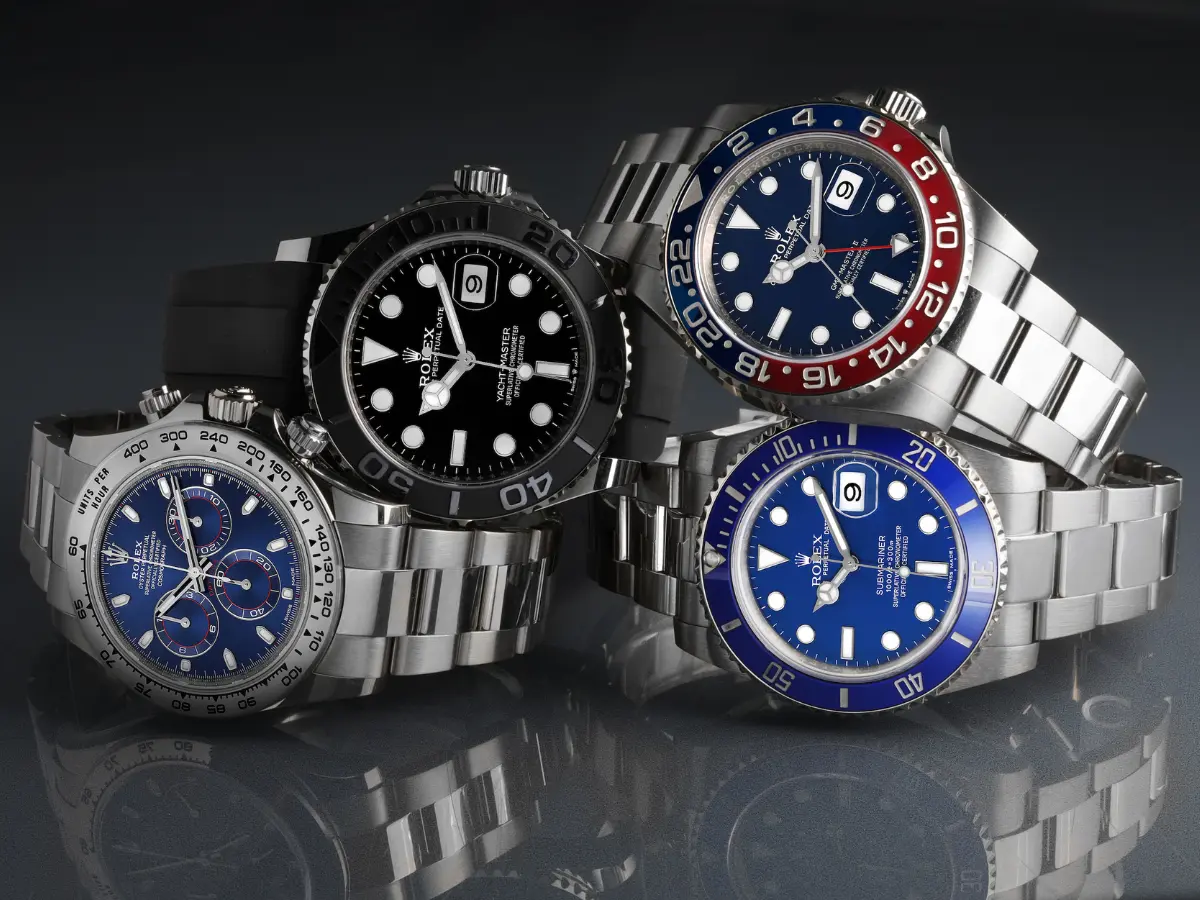
When it comes to luxury watches, few names carry the weight of a Rolex sports model. These timepieces pair prestige with precision engineering and a design language that has barely changed in decades, which is part of why they hold attention on the secondary market.
This guide covers the best Rolex sports watches available today, what sets each apart, and where each one currently sits in terms of resale value and demand. The goal is not to sell you a watch. It is to help buyers, owners, and collectors understand what these Rolex sport models are actually worth once they leave the boutique.
The History of Rolex Sports Watches
Rolex has built robust timepieces since the early 20th century, and the foundation for its sports watches arrived in 1926 with the Rolex Oyster, the world’s first waterproof wristwatch. The screw-down crown and sealed Oyster case gave the brand a platform for watches that could survive real-world conditions, and nearly every sports model since has been built on that architecture.
The Evolution of Rolex Sports Watches
Across the following decades, Rolex introduced a series of purpose-built sports watches, each aimed at a specific use. The Submariner arrived in 1953 as a diver’s watch. The GMT-Master followed in 1954, developed with Pan Am for pilots crossing time zones. The Daytona was launched in 1963 for motorsport timing. Each model was designed around a function first, and that functional honesty is a large part of why vintage Rolex sport models remain desirable today.
Key Features of Rolex Sports Watches
Rolex sports watches are known for durability, precision, and a design that ages slowly. Rolex sports watches for men and women are built to a size and specification that suits a wide range of wrists and uses. A few features define the category. A few features define the category:
- Water resistance: Built to handle pressure, from the 100-meter baseline up to the extreme depth ratings of the dive models.
- Movement: Self-winding mechanical movements engineered for accuracy and a long service life.
- Materials: Oystersteel, gold, and platinum, chosen for corrosion resistance and longevity.
- Design: Function-led looks that stay recognizable regardless of trend cycles.
The Best Rolex Sports Watches Right Now
The five models below are the core of the Rolex sport lineup. For each, we include a short note on its current secondary market position, since that is what matters most once the watch is yours.
-
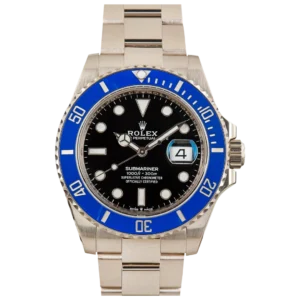
Rolex Submariner
The Submariner is the most recognizable dive watch ever made. It debuted in 1953 as the first wristwatch water-resistant to 100 meters, and the modern no-date reference 124060 now runs a 41mm Oystersteel case rated to 300 meters, with a unidirectional Cerachrom bezel and Chromalight markers. Its appeal is its consistency: the current watch is unmistakably related to the first one.
Secondary market position: the steel Submariner, especially the no-date 124060 and the green-bezel 126610LV, frequently trades at or above retail because demand outpaces boutique supply. It is one of the most liquid Rolex references, which is part of what makes it a dependable store of value.
-
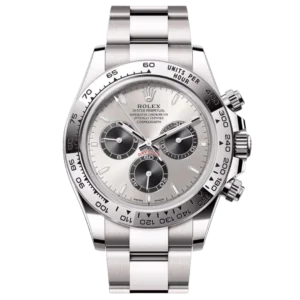
Rolex Daytona
The Daytona is Rolex’s motorsport chronograph. Introduced in 1963, it uses a tachymetric bezel to calculate average speed, three sub-dials, and a high-performance chronograph movement. Its association with Paul Newman turned an already capable tool watch into a cultural icon. The current steel reference reads speeds up to 400 units per hour on the bezel.
Secondary market position: steel Daytonas command some of the strongest premiums in the entire Rolex catalog. Limited production against relentless demand keeps prices well above retail, and the model has a long record of holding value.
-
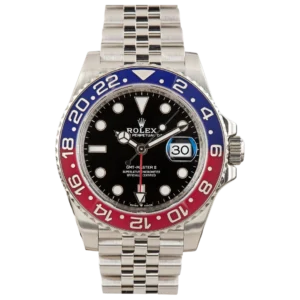
Rolex GMT-Master
Originally built for Pan Am pilots in the 1950s, the GMT-Master lets the wearer track a second time zone using a 24-hour hand and a rotating bezel. It has become the definitive travel watch. The modern GMT-Master II references, including the 126710BLRO (“Pepsi”) and 126710BLNR (“Batman”), are heavily in demand and typically sell above retail.
Secondary market position: the Pepsi and Batman references hold strong premiums thanks to their iconic bezels and global recognition. Note that Rolex discontinued the steel Pepsi at Watches and Wonders 2026, which has pushed its secondary-market value up further, a reminder that discontinuation, not age, is what moves these prices.
-
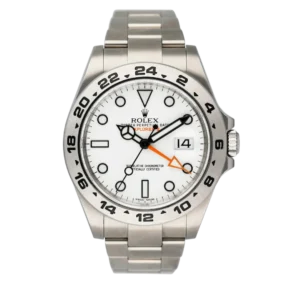
Rolex Explorer
The Explorer is the understated adventurer’s Rolex. Tied to the 1953 ascent of Everest by Edmund Hillary and Tenzing Norgay, it pairs a highly legible dial with a tough Oyster case. The current 36mm reference 124270 and 40mm 224270 keep the formula deliberately simple.
Secondary market position: the Explorer carries more modest premiums than the Submariner or Daytona, with steady rather than explosive demand. Its restraint appeals to collectors who value history and everyday wearability, and it tends to hold value reliably over time.
-
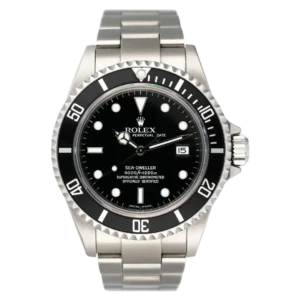
Rolex Sea-Dweller
The Sea-Dweller is the professional’s dive watch, built for saturation diving with a helium escape valve and far greater depth rating than the Submariner. The reference 126600, launched in 2017 to mark the model’s 50th anniversary, is a 43mm watch water-resistant to 1,220 meters.
Secondary market position: the Sea-Dweller holds solid value on the strength of its engineering and comparatively lower production, with consistent demand from serious divers and collectors. It trades at a premium to the Submariner in several configurations.
Value and Demand Overview
| Model | Secondary Market Position | Demand Outlook |
| Rolex Submariner | Steel references (124060, 126610LV) trade at or above retail | High and liquid; limited supply keeps values firm |
| Rolex Daytona | Among the strongest premiums in the catalog | Very high; scarcity and motorsport heritage drive long-term retention |
| Rolex GMT-Master | Pepsi and Batman above retail; steel Pepsi lifted by 2026 discontinuation | High; iconic bezels and global recognition |
| Rolex Explorer | Modest premiums on 124270 / 224270 | Steady; appeals to collectors valuing restraint and history |
| Rolex Sea-Dweller | Solid premiums; trades above Submariner in several configs | Consistent among divers and collectors |
Which of These Holds Value Best Over Five Years?
If the question is pure value retention, the Rolex Daytona has the strongest case. A few reasons stand out:
- Limited production against persistent demand creates lasting scarcity.
- Deep motorsport heritage and the Paul Newman association sustain its icon status.
- A long, consistent track record of holding value on the secondary market.
This is the question retailer guides tend to avoid, because it does not sell more watches. For an owner deciding what to keep or borrow against, it is the one that matters most. Value retention is never guaranteed, and markets shift, but among current Rolex sport models, the Daytona has the deepest record of demand outrunning supply.
How to Care for Your Rolex Sports Watch
Keeping a Rolex sports watch in strong condition protects both its performance and its resale value:
- Servicing: have the watch serviced by an authorized Rolex service center roughly every ten years.
- Cleaning: wipe it with a soft cloth, using mild soapy water to remove dirt and grime.
- Storage: keep it in a cool, dry place away from direct sunlight and moisture.
- Winding: if you do not wear it regularly, wind it periodically to keep the movement running smoothly.
Protecting the Value You Already Own
A Rolex sports watch is a liquid, high-value asset, which is exactly why it works well as loan collateral. If you own one and want cash without selling it, Qollateral offers luxury watch loans that let you borrow against the watch and get it back on repayment. For Rolex owners specifically, our
Rolex collateral loans are built around the models covered in this guide, with appraisals that account for reference, condition, and current market demand.
Verifying Your Rolex Sports Watch Value
Before buying on the secondary market or before borrowing against a watch you own, it helps to confirm what you have. Our guide on how to spot a fake Rolex walks through the authentication details that matter, and if you want a sense of current worth, our article on how much your Rolex is worth covers the factors that drive valuation.
Final Thoughts
Rolex sports watches endure because they were designed to. Whether your interest is the Submariner’s dive lineage, the Daytona’s racing pedigree, the GMT-Master’s travel function, the Explorer’s restraint, or the Sea-Dweller’s depth engineering, each model offers a clear identity and a real place in the secondary market.
Understanding where each one stands on value is what separates an informed owner from a hopeful one. If you own a Rolex and are considering a short-term collateral loan, contact us for a free, no-obligation offer.
Frequently Asked Questions
What makes Rolex sports watches unique?
They combine precision engineering, tough construction, and a design language that stays recognizable for decades. Built from materials like Oystersteel, gold, and platinum, they are made to withstand hard use while holding their value unusually well.
How often should I service my Rolex sports watch?
Rolex recommends servicing roughly every ten years, depending on use and conditions. Regular maintenance keeps the movement accurate and helps preserve the watch’s value.
Can I wear my Rolex sports watch while swimming?
Yes. Rolex sports watches are water-resistant and suited to swimming, provided the winding crown is fully screwed down first to maintain the seal.
Which Rolex sports watch holds its value best?
The Daytona has the deepest record of value retention among current Rolex sport models, driven by limited supply and lasting demand. That said, no watch is a guaranteed investment, and secondary-market values move with the market.
