
 Updated July 31, 2026
 7 minute read
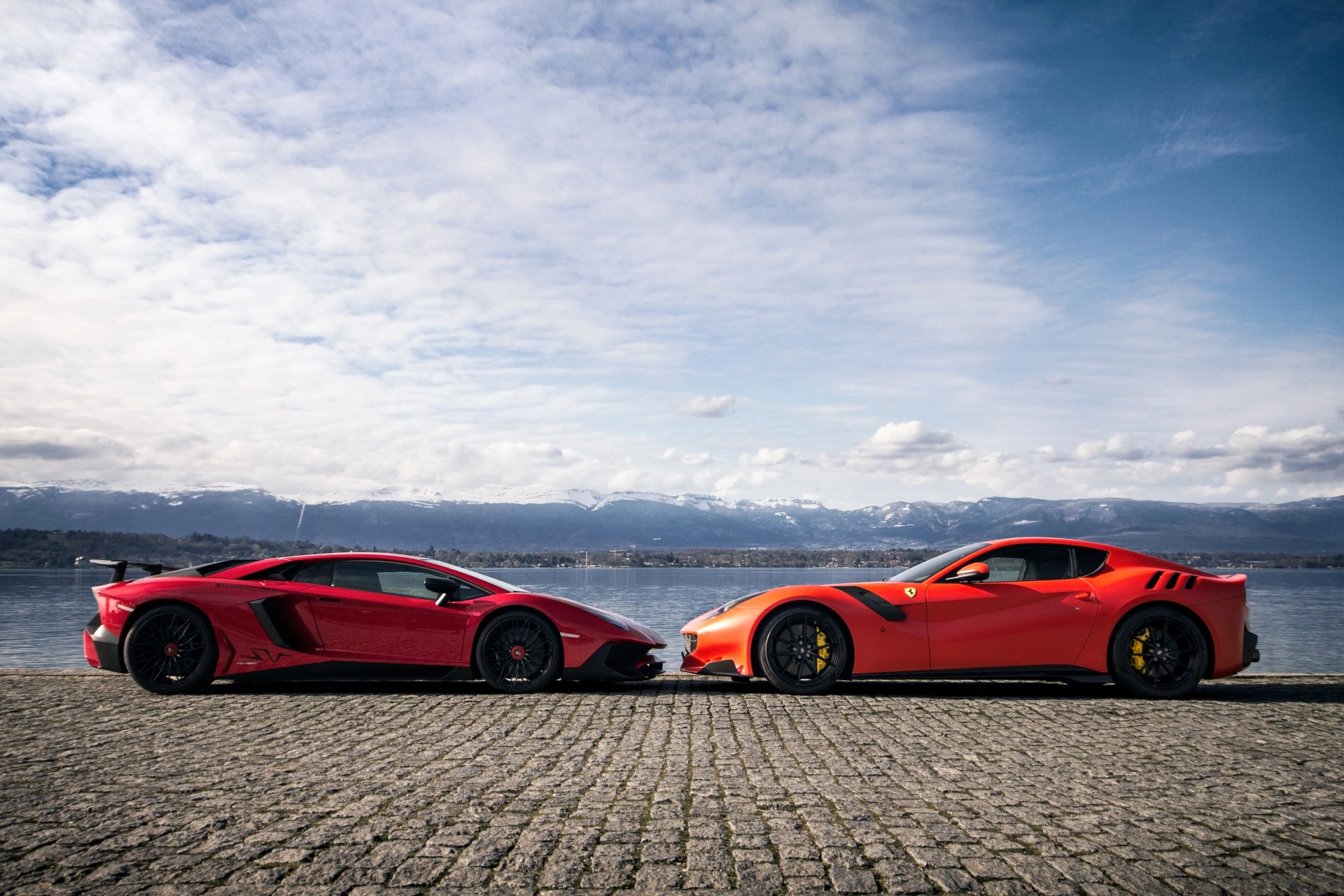
The argument over Ferrari vs. Lamborghini value isn’t new. Both are well-known Italian brands in the luxury space that command a premium on the secondary market, often in the hundreds of thousands to even millions of dollars. Both brands follow their own design codes and are subject to different collector preferences, but are generally known for their exotic aesthetics. There are certainly many differences and similarities. However, the question we’re most interested in is which car brand serves as a better financial asset over time? And how can owners tap into that value?
What Drives Exotic Car Resale Value
When it comes to resale value, production numbers are one of the most significant factors across the collector market. Less inventory coupled with high demand often equals stronger values. This rings particularly true for limited-production models, especially when many of them aren’t actively traded and rarely pop up on the pre-owned market.
Provenance also matters. Important models like first-gen models, end-of-production cars, and homologation specials often command higher resale prices. From there, factory specs, including certain exterior paint colors or interior materials, as well as carbon-fiber packages and bespoke factory personalization, might be more desirable than others. And then there’s condition and documentation. Cars with complete service history, matching numbers, and documented provenance often boast stronger resale values.
Collector preferences, auction sales, and sometimes even interest rates can also affect which models are the most popular at any given time.
Some factors that drive exotic car resale value:
- Production volume and scarcity
- Model heritage and significance
- Factory specifications
- Condition and documentation
- Market demand cycles
Ferrari Resale Value: Where Ferrari Often Excels

Ferrari is notorious for its strict allocation system, which plays a role in the brand’s overall exclusivity and value. It’s true that Ferrari produces more cars annually than Lamborghini. Recent numbers fall between 13,000 and 14,000, while Lamborghini’s are between 10,600 and 10,750. Still, availability for many of the most in-demand Ferraris or special editions is often reserved for vetted buyers. As a result, buying one often requires a strong purchase history or relationship with the brand.
And then there’s the auction market, in which Ferrari comes out on top compared to Lamborghini. In fact, some of the most expensive cars ever sold at auctions have been Ferraris. For example, a 1962 Ferrari 250 GTO fetched over $51 million at Sotheby’s in 2023. What’s more, limited-production models are trading at or above retail. Most notably, the 458 Speciale has risen drastically in value over the past several years. A report by Hagerty puts its growth at 57% year-over-year for some examples.
Not every Ferrari will appreciate, though. Grand Touring cars like the California, Portofino, and standard Roma generally tend to depreciate in the first few years like many other luxury cars.
Key Takeaway: The most valuable Ferraris tend to be Limited Edition or historically important models.
Lamborghini Depreciation: What Owners Should Know
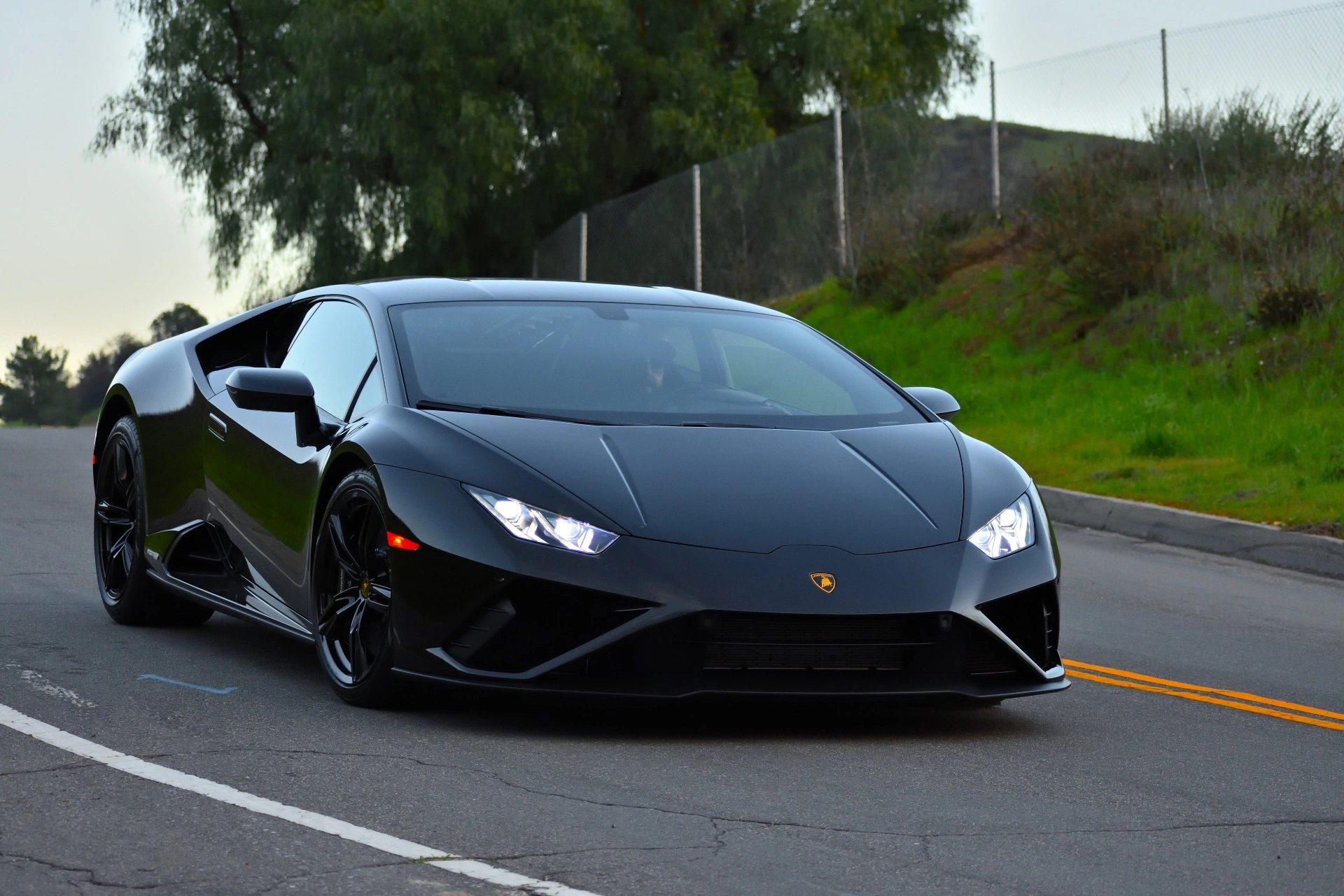
What about Lamborghinis? The brand makes fewer cars annually than Ferrari, but it is still considerably more accessible. It isn’t unheard of for the brand to reach out to loyal customers first when limited-production cars come in. Still, for the most part, many Lamborghinis can be ordered through an authorized dealer without jumping through many of the allocation hurdles one would face at Ferrari. That means less pressure on the secondary market.
Breaking it down a bit further, models considered “entry-level,” such as the Huracán and Urus, depreciate the first few years like many other luxury vehicles. From there, limited-production cars like the Aventador SVJ and the Sián and even classics in excellent condition like the Countach LP400 have seriously impressive long-term appreciation.
Another factor to consider is the brand’s bespoke Ad Personam program and restoration through Polo Storico, both of which add provenance and value when properly documented.
Key Takeaway: Similar to Ferrari, the Lamborghinis with the strongest value retention tend to be limited-production and classic models.
Do Ferraris Hold Their Value? Comparing Ferrari and Lamborghini
Ferrari has had stronger resale numbers over the years, thanks in large part to its strict allocation policy and, of course, collector demand. However, that doesn’t mean every Ferrari will outperform Lamborghini. A properly maintained Lamborghini Miura, widely considered the world’s first Supercar, can easily outperform a standard pre-owned Ferrari California.
|
Factor |
Ferrari |
Lamborghini |
|---|---|---|
| Retail accessibility | Largely allocation-based | Relatively easily accessible via dealer |
| Auction performance | Industry leader | Strong for classic cars or limited editions |
| Standard production | GT models depreciate | Standard models depreciate |
| Allocation and waitlist premiums | Strong on new limited releases | Present but less consistent |
| Classic collector market | Extremely strong | Strong for some references |
| Factory personalization | Classiche & Tailor Made | Polo Storico & Ad Personam |
Both Brands Make Excellent Collateral Assets
It doesn’t matter if it’s a Lamborghini or a Ferrari. Models from either brand are valuable financial assets that the owner can use to access liquidity without having to sell. Qollateral is a trusted asset-backed lender that accepts both marques for collateral loans ranging in value from $50,000 to $2.5 million. All loan offers are based on the car’s current wholesale market value and other data specific to its make and model, such as market demand and auction history, rather than on generic pricing guides. That means higher loan amounts that actually reflect the car’s true value.
Benefits of working with Qollateral:
- Same-day funding available
- No credit checks
- Non-recourse loans
- Fully insured and climate-controlled storage
- Professional preservation throughout the loan
- All vehicles fully insured from intake through return
Learn more about Ferrari Collateral Loans , Lamborghini Collateral Loans, or Luxury Car Collateral Loans.
Frequently Asked Questions
Does factory color affect resale value differently for Ferrari vs. Lamborghini?
Yes. Resale values for both brands are affected by factory color and originality. Ferrari collectors tend to prefer classic reds, rare paint-to-sample options, and traditional heritage racing colors. Lamborghini collectors gravitate more toward a broad range of bold colors. Repainting a Ferrari or Lamborghini a color that isn’t on the factory build sheet can drop its value on the secondary market.
Are limited-edition models always better investments than standard production?
Not necessarily. Limited production doesn’t always equal guaranteed appreciation. There are certainly ultra-rare cars, like the Ferrari 250 GTO, that are worth much more than their original sticker price. However, some special editions, like the Lamborghini Huracán Avio, tend to depreciate alongside their base models. For example, the Lamborghini Huracán Avio retailed for around $245,000-$260,000 and now trades for $195,000-$245,000.
How does mileage affect resale value differently for Ferrari vs. Lamborghini?
Mileage varies by brand and model. For Ferraris, provenance and pristine condition are incredibly important, so models with low mileage tend to command a strong premium on the secondary market. Lamborghini, on the other hand, has more of a reputation as a daily driver. The odometer doesn’t have as much of an effect on resale value as it would for, let’s say, a classic Ferrari.
Can I use a Ferrari or Lamborghini as collateral for a loan without selling it?
Yes. Qollateral accepts both brands as security for loans valued between $50,000 and $2.5 million. All cars are professionally appraised based on current fair market value and returned to the borrower in the same documented condition upon the end of the loan terms.
Does authorized service history matter more for one brand than the other?
Yes. Complete service records affect the value of both brands. Ferrari collectors, in particular, appreciate a complete, uninterrupted service history, especially for classic and limited edition models.
Final Thoughts
When it comes to Ferrari vs. Lamborghini value, there isn’t a clear winner. Collector car values are rarely based on brand alone. Production numbers, specs, provenance, and collector demand all play a major role in overall value. Limited-production Ferraris and nicely maintained Lamborghinis can both be valuable financial assets to use as collateral for an asset-backed loan. There is no need to sell to tap into their value.
Ready to borrow against your luxury vehicle? Contact the Qollateral team for a free, no-obligation appraisal to find out how your Ferrari or Lamborghini can better serve you.
- 100% Discreet
- 100% Safe
- 100% Secure
- 100% Risk-free
- 100% Insured
- 100% Satisfaction Guarantee
