
 Updated May 12, 2026
 9 minute read
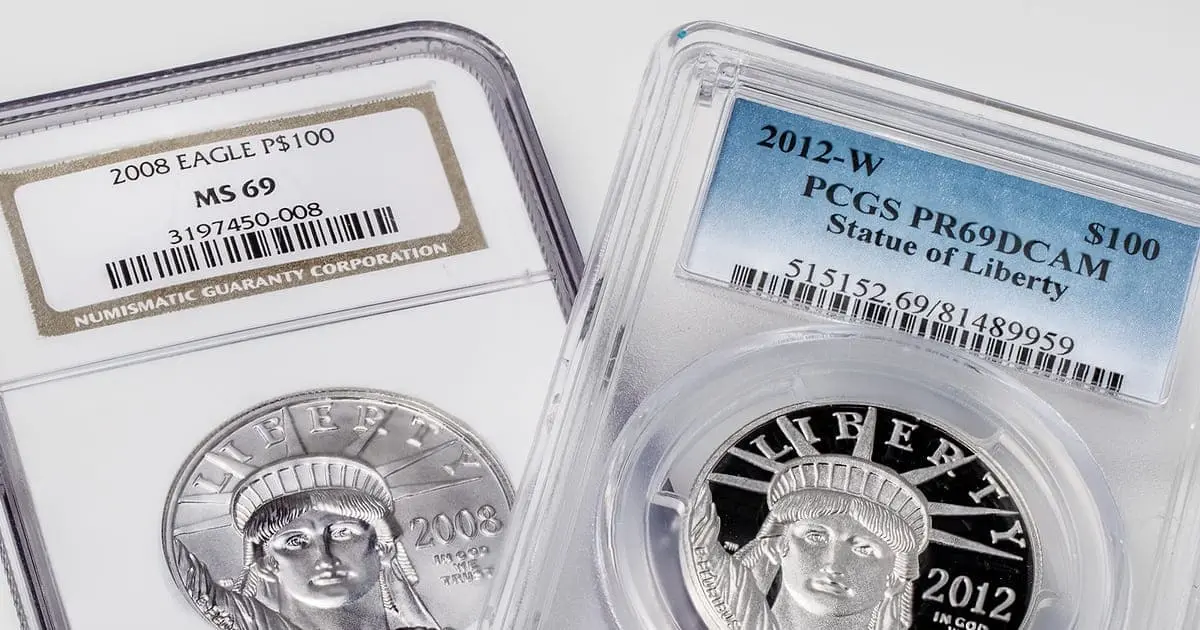
Choosing between PCGS vs. NGC coin grading comes down to coin type, intended use, and budget. For classic United States coins and investment-grade rarities, a professional coin grading service like PCGS typically commands stronger market premiums. For world coins, ancient numismatics, and bulk submissions, NGC’s rare coin appraisal services offer clear advantages. Most serious collectors use both.
Understanding Professional Coin Grading Service Standards
A professional coin grading service does more than assign a number. It authenticates, grades, and encapsulates coins in tamper-evident holders that protect their condition and certify their grade for buyers, sellers, insurers, and lenders.
Both PCGS and NGC use the universally accepted Sheldon 70-point scale, where a grade of 1 represents a barely identifiable coin, and 70 represents a perfect, flawless example. Expert numismatists evaluate each coin across four primary criteria:
- Strike sharpness and definition of design detail
- Surface preservation, including marks, scratches, and contact
- Original luster and the quality of remaining mint brilliance
- Overall eye appeal relative to the assigned grade
Encapsulation in a sealed, tamper-evident holder protects the coin from environmental damage and handling while making the grade visible without removing the coin from its case. This standardization matters enormously for coin-backed loans, estate planning, insurance, and auction sales, where objective third-party grades replace subjective dealer opinions.
Both PCGS and NGC are accepted by Qollateral for coin-backed loans, and certified coins consistently support stronger loan valuations than raw, uncertified examples.
PCGS: The Industry Pioneer Since 1986
PCGS was conceived in 1985 and began operations on February 3, 1986, becoming the first third-party coin grading company and fundamentally changing how collectors and investors transacted. Before PCGS, coin grades were self-assigned by sellers, and disputes were common. The introduction of sonically sealed, tamper-resistant holders with guaranteed grades created a standard the market rapidly adopted.
Several features define the PCGS experience:
- TrueView photography: High-resolution digital imaging that captures the coin’s surfaces in detail, widely used in auction listings and online sales
- Plus (+) grades: Awarded to coins that are high-end for their assigned grade, approaching the quality of the next level. NGC also offers a Plus designation using the same criteria, making it a shared standard across both services.
- Star designation: NGC’s trademarked designation for coins with exceptional eye appeal beyond what the numerical grade alone conveys
- Set Registry: A competitive program where collectors build and rank complete sets of graded coins, driving sustained demand for high-grade PCGS-certified examples
- CoinFacts database: A comprehensive online resource combining population reports, auction records, and pricing history
PCGS is widely regarded as the more conservative grader for Mint State coins, particularly in the MS65 to MS67 range. This perception translates directly into market premiums. In classic United States series, including Morgan dollars, Liberty gold, and pre-1933 issues, PCGS-certified coins typically command 5% to 15% more than equivalent NGC-graded examples.
For collectors focused on classic US coinage, registry set building, or investment-grade rarities destined for major auctions, PCGS is generally the preferred submission target.
NGC and Rare Coin Appraisal Services Expertise
Founded in 1987, NGC grew rapidly to become the world’s largest third-party grading service by volume. Its rare coin appraisal services extend well beyond basic grading, encompassing variety attribution, conservation services, and specialized authentication for world and ancient coins.
Key NGC features include:
- Plus (+) and Star designations: NGC awards the Plus to coins at the high end of their grade and the trademarked Star to coins with exceptional eye appeal, both assigned automatically at no additional fee
- EdgeView holders: A specialized holder design that displays the coin’s edge without removal from the case, important for edge lettering and die variety research
- PhotoVision imaging: NGC’s imaging service that enhances online presentation and supports authentication verification
- Ancient coin expertise: NGC employs specialists in archaeology, art history, and classical numismatics to grade and authenticate ancient coinage, an area where PCGS has more limited reach
NGC holds official grading service status with both the American Numismatic Association (ANA) and the Professional Numismatists Guild (PNG), providing institutional credibility across the numismatic community.
NGC’s bulk submission programs offer meaningful cost savings for dealers and volume collectors without compromising grading quality, making them the practical choice for large-scale submissions and international market preparation.
PCGS vs. NGC Grading Standards and Market Perception
Both services use identical grading standards on paper. In practice, market participants recognize meaningful differences in perception and pricing outcomes.
PCGS is generally considered the stricter grader for Mint State United States coins, particularly in the upper Mint State grades. This strictness supports the 5% to 15% premium that PCGS coins typically command over NGC coins in the same grade for classic US series such as Morgan dollars, Seated Liberty issues, and pre-1933 gold. Collectors building registry sets almost universally favor PCGS for US coins, as the Set Registry program creates direct competition for top-graded examples.
NGC’s strength lies in breadth. Their world coin and ancient coin authentication draws global specialists, and their volume capabilities give them dominance in modern coinage and bulk dealer submissions.
The market preferences by collector segments are:
- Registry set collectors: Strong preference for PCGS
- Ancient and world coin specialists: Strong preference for NGC
- Modern bullion dealers: NGC for faster turnaround and cost efficiency
- Classic US gold investors: PCGS for auction premium potential
Understanding these preferences before submitting allows collectors to direct coins to the service most likely to maximize their specific value.
Pricing Comparison: PCGS vs. NGC Grading Costs
Submission costs vary by declared coin value, service level, and requested add-ons. Both services require an annual membership.
| Service Level | PCGS Fee | NGC Fee | Est. Turnaround |
| Economy | $22 | $25 | 60–70 business days |
| Regular | $40 | $35 | 35–50 business days |
| Express | $75 | $65 | 10–15 business days |
| Walk-Through | $300+ | $300+ | Same day |
Note: turnaround times fluctuate with submission volume.
PCGS requires a $69 annual membership minimum. NGC membership starts at $25. Both offer dealer-level programs with discounted per-coin fees for volume submissions.
Additional fees apply for services including variety attribution, imaging upgrades, and special holder types. PCGS TrueView photography and NGC PhotoVision both add cost but typically improve online resale performance enough to justify the fee for higher-value coins.
For ROI-focused decisions: grading costs should be weighed against the expected premium a certified coin commands over its raw equivalent. For common-date coins of modest value, grading costs may not be recoverable. For scarce, key-date, or high-grade pieces, the investment in certification is a well-established market practice.
When to Choose PCGS vs. NGC for Maximum Value
The right service depends on what you are trying to accomplish.
Choose PCGS when:
- Submitting classic United States coins, Morgan dollars, or pre-1933 gold coins
- Building a registry set or targeting major US auction venues
- Prioritizing resale premium over submission cost
- Seeking the highest loan valuation for numismatic investment holdings
Choose NGC when:
- Submitting world coins, ancient coins, or modern issues
- Working with high volumes where bulk submission pricing matters
- Preparing coins for international buyers or dealers
- Using the Star designation to distinguish exceptional eye appeal pieces
For collectors treating rare coins as an asset class, a diversified submission strategy makes sense: direct US coins to PCGS for premium potential and non-US or modern issues to NGC for cost efficiency and breadth of expertise. Most sophisticated collectors maintain accounts with both services for exactly this reason.
Using Graded Coins as Collateral for a Coin Collateral Loan
Professional grading has made certified coins a viable and practical collateral asset. A coin collateral loan secured by PCGS or NGC-certified coins gives lenders a verified, third-party grade and established secondary market data to work from, which supports stronger loan valuations than raw coins can provide.
Qollateral accepts both PCGS and NGC-certified coins as collateral for asset-backed loans. Loan amounts are based on the appraised liquid wholesale value of the certified coin at the time of evaluation. Rare coin appraisal services like PCGS and NGC certification directly inform this valuation by providing objective, market-recognized grade documentation.
The process is straightforward: submit your certified coins for appraisal, receive a preliminary offer with no obligation, and if accepted, receive same-day funding. All coins are stored securely in the International Gem Tower vault in New York City, fully insured by Lloyd’s of London, for the full duration of the loan term.
Frequently Asked Questions
What is the most respected coin grading service?
Both PCGS and NGC are widely respected across the numismatic community. PCGS holds a slight edge in market premiums for classic United States coins, while NGC leads in volume graded and commands a strong preference for world and ancient numismatics. Neither is universally superior; the better choice depends on the specific coin and intended use.
What are the two best coin grading companies?
PCGS and NGC are universally recognized as the two leading services. They have collectively graded over 130 million coins and are accepted by all major dealers, auction houses, and lenders, including Qollateral.
What does PCGS charge for grading a coin?
PCGS fees start at $22 for economy service and reach $300 or more for walk-through, same-day service. A $69 annual membership is required, and additional fees apply for imaging, variety attribution, and shipping. Total cost should be weighed against the expected premium a certified coin commands at resale.
How long does PCGS take to grade coins?
PCGS turnaround times range from same-day walk-through service to 60–70 business days for economy submissions. Regular service typically runs 35–50 business days. Current estimates fluctuate with submission volume and should be confirmed at pcgs.com before submitting.
Can I trust PCGS and NGC grading?
Both services back their grades and authenticity determinations with comprehensive guarantees and published remedy policies. Their consistency across tens of millions of submissions has made them the standard reference for coin transactions, insurance, estate valuation, and lending decisions worldwide.
Which grading service is better for pre-1933 gold coins?
Both services authenticate and grade pre-1933 gold coins competently. PCGS generally commands a market premium of 5% to 15% over NGC for classic US gold in the same grade, making it the preferred submission target for collectors prioritizing resale value or auction performance.
When evaluating PCGS vs. NGC coin grading for your collection, the decision comes down to coin type, market destination, and goals. Both services deliver reliable authentication and grading, and both are accepted by Qollateral for coin-backed loans. For personalized guidance on using your certified coins as collateral, contact Qollateral for a confidential, no-obligation appraisal.
