
 Updated April 30, 2026
 11 minute read
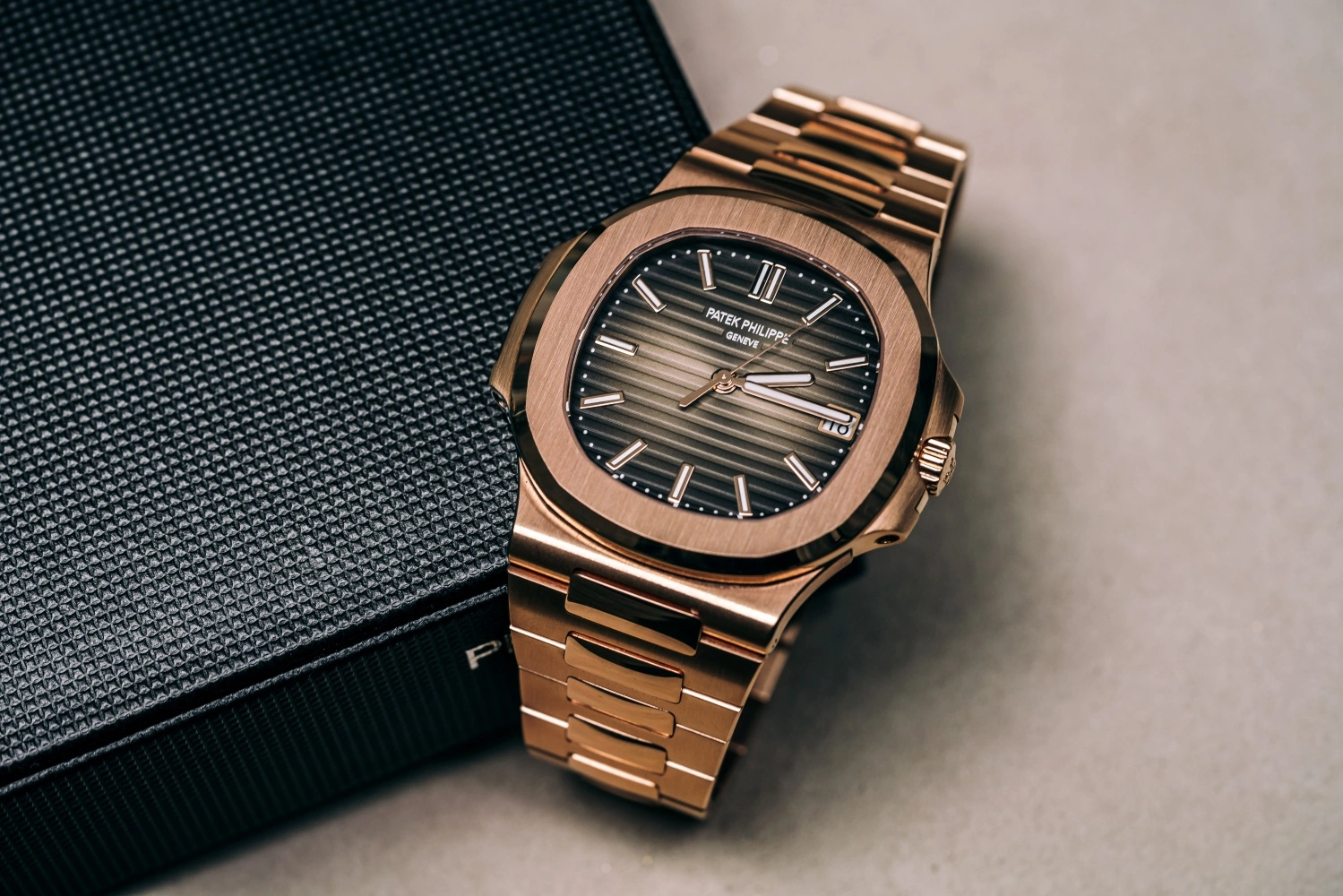
Patek Philippe is one of the most respected names in Swiss luxury watchmaking. Its catalog is home to a serious collection of complex mechanical and even quartz watches, many of which have made history through fascinating new innovations. We’ll dive more into that as you read on. More importantly, the brand dates back to 1839 and, while it changed ownership in 1932, it remains one of the oldest continuously operating brands in the industry. The brand has serious provenance and influence, fueled by a rich legacy of family ownership and enduring value and craftsmanship, which we will unpack in this comprehensive history of Patek Philippe Watches.
When Was Patek Philippe Founded: The Origin Story
Patek Philippe’s origin story technically dates back nearly two centuries to 1839, when Antoine Norbert de Patek and Franciszek Czapek created the company “Patek, Czapek & Cie” in Geneva, Switzerland. The duo spent the next several years producing pocket watches, like Pocket Watch No. 87, before eventually going their separate ways in 1845. Franciszek Czapek would go on to create his own company that year called “Czapek & Cie,” while Antoine Norbert de Patek partnered with Jean Adrien Philippe, a French watchmaker and the pioneer of the keyless winding system, under the company “Patek & Cie,” also in 1845. By 1851, the firm was officially called “Patek, Philippe, & Cie”. So, while there were many notable dates during the brand’s early years, the answer to the question of when was Patek Philippe founded boils down to when the name Patek Philippe as we know it today originally formed, which was in 1851.
The Founders: Patek and Philippe
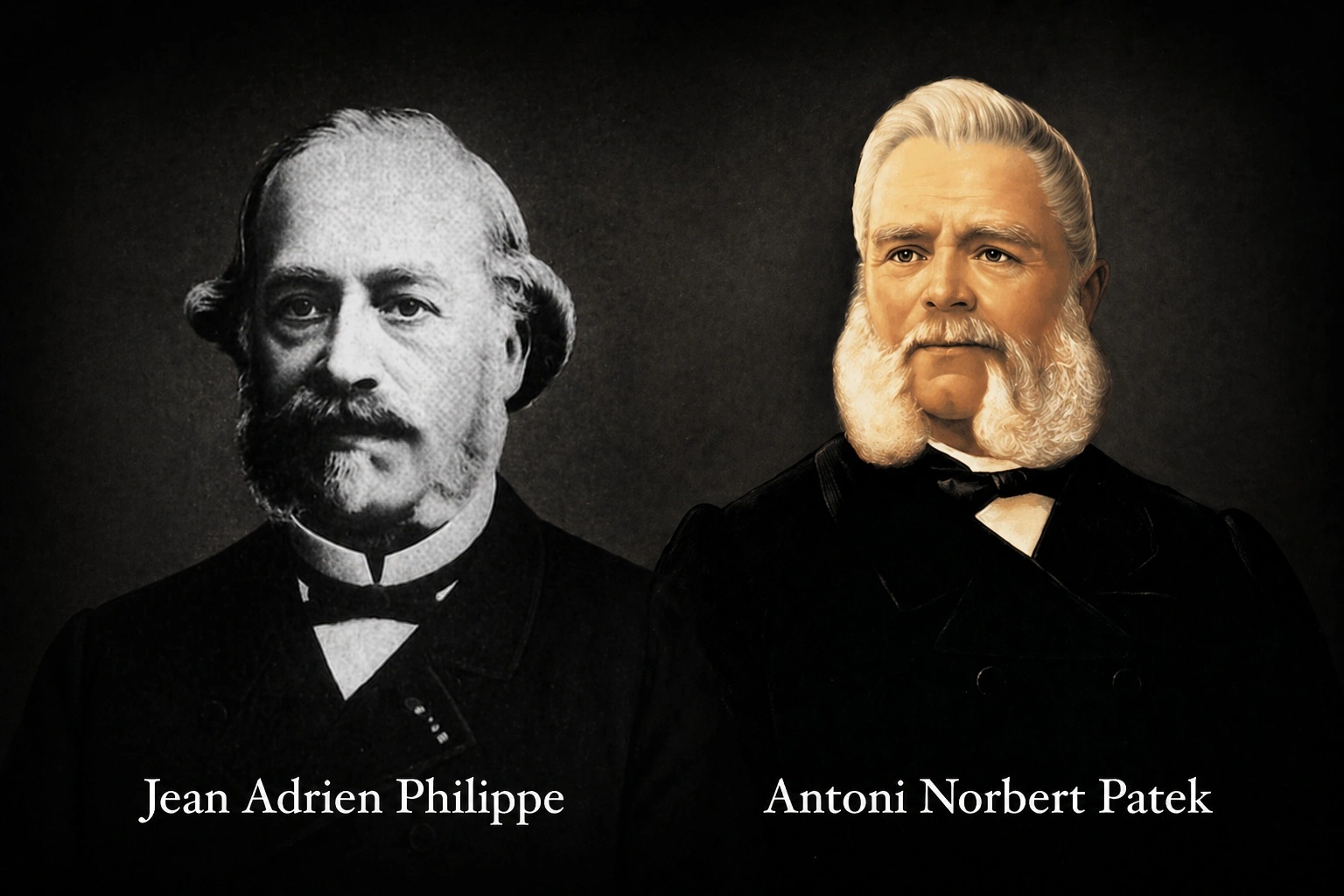
That brings us to the founders and how each of their unique talents contributed to the history of Patek Philippe Watches. Antoni Norbert Patek was born into a prominent Polish family. In the 1930s, he was forced to emigrate to France after fighting against Russia in the Polish November Uprising. When France ousted Patek and other former insurgents, he found himself in Switzerland, where he dabbled in various trades from trading wine and liquor to painting, and, eventually, producing luxury pocket watches. Even from the start, he valued quality and precision above all else, sourcing only the finest movements from experienced Genevan watchmakers.
Jean Adrien Philippe is the other half of the name “Patek Philippe.” He was born in northern France and began making watch movements at 25. His original claim to fame, the keyless winding system, was invented just a few years later in 1842. With this system, the wearer can wind their watch using the crown instead of a key, a feature that would go on to define modern watchmaking. He presented his innovation at the 1844 World’s Fair, where it won him a bronze medal and where he first met Antoni Norbert Patek. Patek saw his potential, and it didn’t take him long to go from head watchmaker to full partner of Patek’s company by 1851.
Patek’s business mind and Philippe’s watchmaking prowess and eye for innovation created what would become one of the most powerful partnerships in Swiss watchmaking, a legacy that continues today with more than 100 patents to its name and many of the world’s most expensive and renowned timepieces.
Early Milestones and Royal Endorsements
The Swiss watchmaker started to rise to influence shortly after Philippe came aboard in 1845. He filed a patent for his innovative keyless winding system that same year. Later, during the Great Exhibition in London in 1851, Queen Victoria received a Patek Philippe pendant watch adorned with a diamond rose motif. That moment established the brand’s association with royalty and other influential figures. That brings us to Patek Philippe’s next most important early milestone, 1868, and the brand’s first wristwatch. According to some reports, that watch was later sold to the Countess Koscowicz of Hungary sometime in the late 1870s. By 1887, Jean Adrien Philippe had helped the brand dream up and officially trademark its iconic Calatrava cross emblem.
- 1845: Keyless winding system is patented
- 1851: Queen Victoria acquires a Patek Philippe pendant watch
- 1868: Patek Philippe makes its first wristwatch
- 1887: Patek Philippe trademarks the Calatrava cross emblem
Where Are Patek Philippe Watches Made: Geneva and the Manufacture
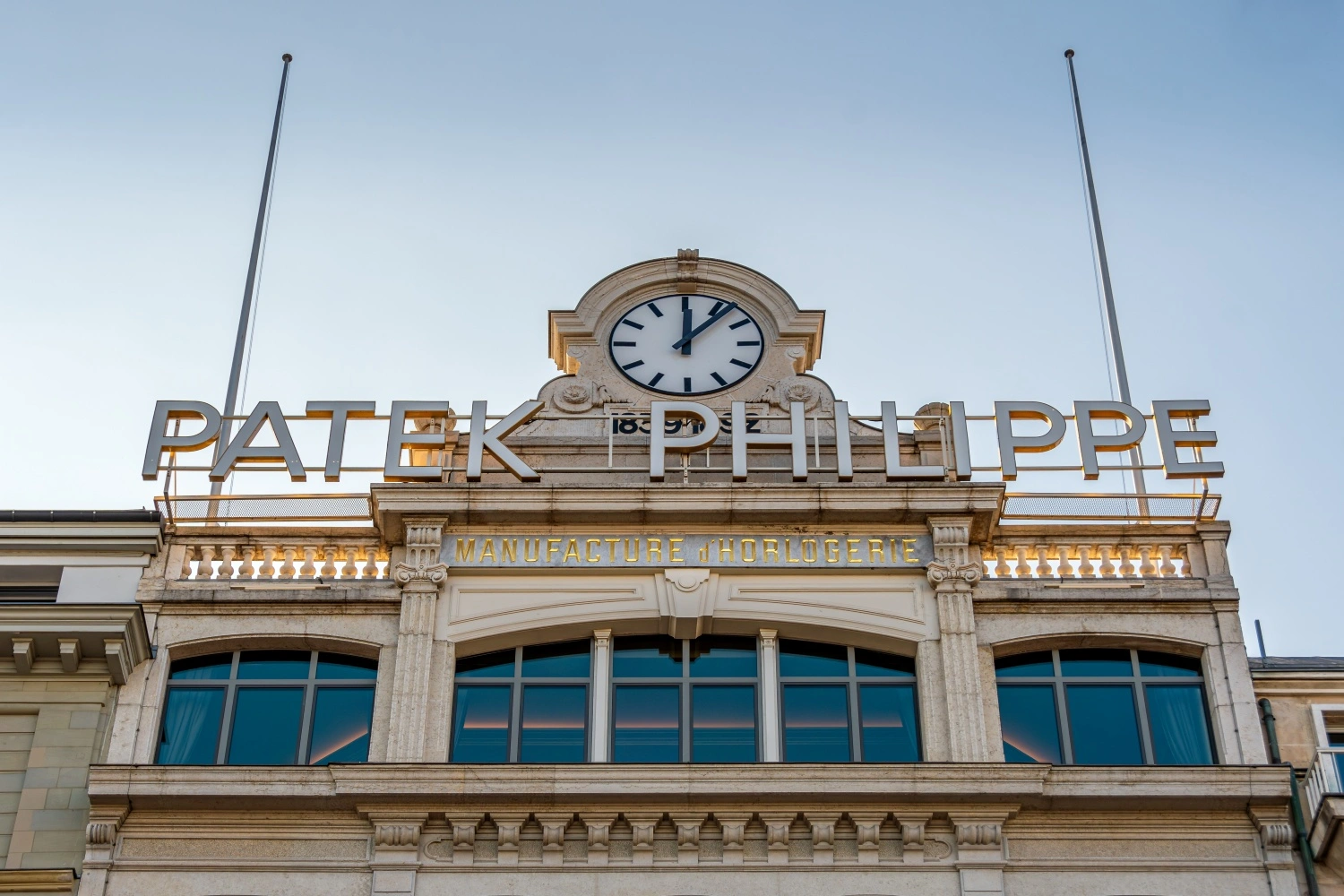
Patek Philippe watches have always been made in Switzerland, although their history is a bit more storied than that. When the brand began in 1839 as Patek, Czapek & Cie, its operations were based in a workshop at 29 Quai des Bergues in Geneva, Switzerland. The company moved to a different building on Quai des Bergues after Jean Adrien Philippe took over for Czapek.
By 1853, the duo established a new, larger manufacturing headquarters at 41 Rue du Rhône, also in Geneva, Switzerland. That location now serves as the Patek Philippe Salons Genève. Today, it is the only location where one can view the entire current production catalog. Initially, the brand occupied just two stories of the Rue du Rhône headquarters, but by 1891, it had acquired the entire building. The company brought in architect Jacques-Elisée Goss to renovate the building, equipping it with heating and electricity and paving the way for a new modern era for the brand.
Patek expanded to a few other buildings throughout Geneva over the next several decades, but by 1996, it had brought all its operations together in a new location in Plan-les-Ouates, Geneva. More recently, in 2020, Patek Philippe officially unveiled a brand-new 133,000 sqm facility, also in Plan-les-Ouates, called “PP6,” complete with all the latest state-of-the-art equipment.
The Stern family bought Patek Philippe in 1932, but even today, the brand remains one of the last family-owned luxury watchmakers. That kind of independence affords the company the freedom to focus production fully in-house, thus producing some of the finest, most exquisite wristwatches on the market today.
- 1839: The brand opens its first workshop in Geneva
- 1853: Patek Philippe moves to a larger headquarters on Rue du Rhône
- 1891: The brand hires architect Jacques-Elisée Goss to renovate and add heating and electricity
- 1907: a fifth floor is added
- 1964: Patek expands to a new building on 2 Rue des Pêcheries
- 1996: A new flagship location is established in Plan-les-Ouates
- 2020: Patek Philippe opens the PP6 facility
Iconic Complications and Watchmaking Innovations
As the Patek Philippe slogan goes, “You never actually own a Patek Philippe. You merely look after it for the next generation.” That idea comes from the brand’s approach to watchmaking as a whole. Every compilation and innovation was developed to last. In fact, some have even gone on to shape the industry. One such example is the double chronograph, which the brand patented in 1902. Also called a split-seconds chronograph, this mechanism allows the wearer to time two different events at the same time. The first wristwatch with a split-seconds chronograph came about in 1923 as Patek Philippe No. 124 8244. Since then, brands such as Breitling, Jaeger-LeCoultre, IWC, Richard Mille, and others have produced watches featuring the complication.
The momentum continued from there. Patek Philippe released the No. 97 975 in 1925, making it the first wristwatch with a Perpetual Calendar, a mechanism with various calendar displays, such as day, month, and date. The movement automatically accounts for leap years, so there is no need to manually adjust for different months. Then came the ultra-complicated Pateks. The brand developed the Henry Graves Supercomplication, a mechanical watch with 24 complications, in 1933. The Caliber 89 followed in 1989 with an incredible 33 complications with the Grandmaster Chime ref. 5175 joining its ranks in 2014 with 20 complications.
- 1902: Patek Philippe patented the Double Chronograph
- 1923: The No. 124 8244 became the first wristwatch with a split-seconds chronograph
- 1925: Patek Philippe releases the first wristwatch with a Perpetual Calendar, No. 97 975
- 1933: The Henry Graves Supercomplication with 24 complications
- 1989: Caliber 89 with 33 complications
- 2014: Grandmaster Chime with 20 complications
Iconic Collections That Shaped the Brand
Calatrava: Released in 1932 via ref. 96 and named after the company’s emblem, the Calatrava cross. The brand drew inspiration for this collection from the German Bauhaus movement, where form follows function, creating what many consider the quintessential round luxury watch.
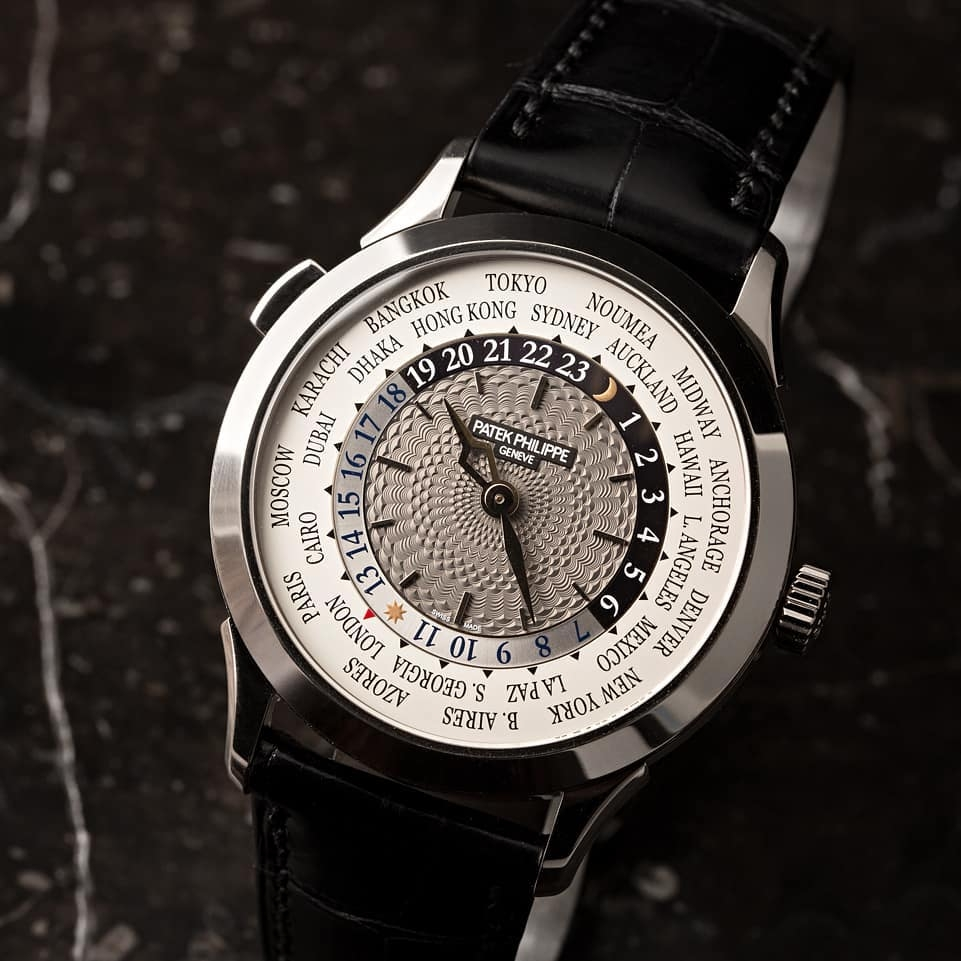
World Time: Released in 1939 via ref. 1415. Many brands make world time watches, including Omega, Patek Philippe, and Vacheron Constantin. As its name suggests, the world’s 24 different time zones are displayed, often on the dial.
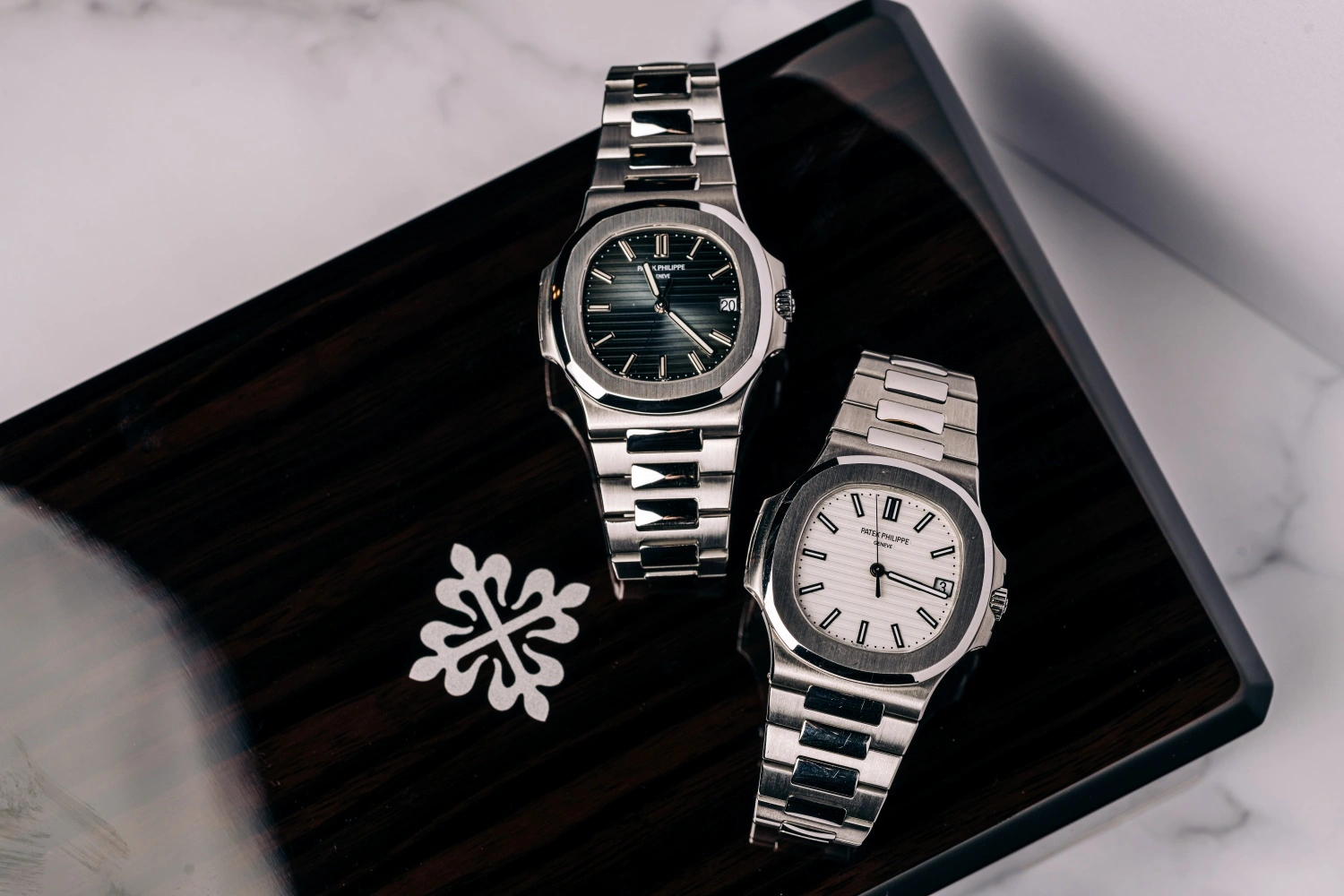
Nautilus: Released in 1976 via ref. 3700. The Gerald Genta masterpiece follows in the footsteps of the Audemars Piguet Royal Oak, released in 1972 during the Quartz Crisis, which Genta also designed. That Royal Oak was the first steel luxury sports watch. Releasing the similar Nautilus marked a new direction for the brand.
Aquanaut: Released in 1997 via ref. 5060A. This collection was inspired by the Nautilus with similar, but slightly more contemporary design codes.
Perpetual Calendar Chronograph: Released 1941 via ref. 1518. This watch marked the brand’s first serially produced Perpetual Calendar. Patek Philippe only made 281 pieces. Most were gold, while only 4 were steel.
How Much Is a Patek Philippe Watch Worth: Value in the Secondary Market
According to Watcharts, the average Patek Philippe watch will set you back around $49,000, although prices can exceed well into the 6-figures and sometimes even reach the millions. At the same time, it’s also possible to find entry-level watches like the Patek Philippe Golden Ellipse for between $10k and $15k on the secondary market. Collectors highly seek the Nautilus, and its pricing spans a wide range. Older models can fall as low as $50k, while the more desirable models, like the Tiffany Patek Philippe Nautilus, command massive sums in the millions.
Do Patek Philippe Watches Hold Their Value: Collectability and Investment Considerations
Browse a list of the most expensive watches in the world, and you’re likely to see several Patek Philippe watches. There’s a good reason for that. Patek Philippe crafts these watches to last for generations, using some of the most sophisticated calibers in the world to achieve exceptional quality. That said, Patek Philippe watches hold value, but exactly how well depends on factors such as market demand, the model, and provenance.
Accessing the Value of Your Patek Philippe with Qollateral
Collectors often pass Patek Philippe watches down from generation to generation, giving them immense sentimental value. When not inherited, owners typically acquire them through hard work, making them assets few are willing to part with permanently. So, what are the options when it comes to accessing value?
Instead of selling, collectors can also borrow against Patek Philippe watches through a collateral loan. It’s discreet, safe, and most importantly, allows them to retain ownership of their watch. The go-to for many watch collectors is Qollateral, a trusted asset-backed lender based in NYC.
Their lending services provide same-day funding without a credit check, with support from a team of experienced appraisers who have worked with luxury watches for years. We fully insure every watch through Lloyd’s of London and store it in a high-tech, fully monitored vault inside NYC’s International Gem Tower to ensure complete peace of mind.
FAQ — Patek Philippe Questions Worth Asking
Is Patek Philippe still an independent, family-owned company?
Yes. The Stern family acquired the company in 1932 and continues to lead it today under President Thierry Stern. Patek Philippe remains one of the last family-owned watchmakers in Geneva.
What is the Patek Philippe Seal, and why does it matter?
The Patek Philippe Seal is a certification that the brand uses to ensure that every watch it produces meets specific standards. The seal covers 65 different criteria across four categories: workmanship, precision, reliability, and service.
How long does it take to make a Patek Philippe watch?
Most Patek Philippe watches take about 9 months to make. However, some of the more complicated models can take several years to complete.
Which Patek Philippe references are considered the most collectible?
Some of the most collectible Patek Philippe “Grail” watches include the Tiffany dial Nautilus ref. 5711, the inaugural Nautilus ref. 3700, the Aquanaut ref. 5167, and the white gold Calatrava ref. 6119G.
Can I use a Patek Philippe watch as collateral for a loan?
Yes. Patek Philippe watches have strong demand and pre-owned market value, which makes them ideal for an asset-backed loan. It’s important to work with a lender, like Qollateral, with experience in luxury watches to secure the highest-offer loan.
A Watch Brand Made to Outlast Generations
Patek Philippe has managed to stay relevant and valuable since the mid-1800s by holding fast to its independence and innovation. Each timepiece holds more weight than what’s on the wrist. Let the Qollateral team help you tap into that value by scheduling an appointment for a free, no-obligation quote.
Call/Text: 212-287-5257
- 100% Discreet
- 100% Safe
- 100% Secure
- 100% Risk-free
- 100% Insured
- 100% Satisfaction Guarantee
